Days 1-2 (March 12-13, 2026): School’s out, we’re off to Cabo Verde
So, why did we decide to go to Cabo Verde? Well, about 15 years ago, we did our first trip to the Azores - and loved it. Then, we visited the Canary Islands and Madeira - and loved those, as well. It all got me to scouring the Atlantic Ocean, to see if other archipelagos existed, leading me to stumble across Cabo Verde. Fast forward a few years, CBC produced a docu-series called,”The Island Diaries”, in which Montreal-based Sophie Fouron explored some of the world’s most interesting islands. Cabo Verde is one of the destinations she covered in the series. Seeing that episode sealed the deal and, ever since, Cabo Verde has been on our travel bucket list. Last March, a 42-hour set of flights to Samoa, coupled with a 12-hour time change, resulted in Pam saying, “Next March Break, we need to reduce the jet lag and the travel time.” With just a two-hour time change from Halifax and a mere 16 hours of travel time from Halifax, the timing seemed right to make Cabo Verde our March Break 2026 destination.
After Pam’s full teaching day, we headed out the door at 4:10PM via Uber to the bus terminal, from where we caught the Halifax Transit express bus to the airport. A freezing rain storm had wrecked havoc across parts of Ontario and Quebec, as well as throughout New Brunswick and PEI. Fortunately, both Halifax and Toronto were narrowly spared from that storm. However, the impacts of those weather systems did result in many cancellations at Halifax Airport. Luckily, our Porter Airlines flight was spared. We did encounter an hour-long delay in departing, though, and already having a narrow connection window in Toronto, things were right down to the wire, connection-wise. When we were pulling up to our gate in Toronto, Azores Airlines texted us to say we had missed the cutoff to check-in. We pleaded (via text) and they agreed to hold our seats. It was touch and go for awhile there! We did make the packed flight, in the end, and we thoroughly enjoyed our business class seats on the overnight flight (5.5 hours). It was a quick connection in Ponta Delgada, Azores, and we were off on a 3.5 hour flight straight south to Praia, the capital of Cabo Verde. We landed there 20 minutes early.
Most international arrivals require four things: getting an e-visa on arrival (Cabo Verde charges 31 Euros for this); getting a SIM card; getting local currency; and - perhaps most stressful - negotiating a taxi ride in a sea of taxi touts, all of whom are set on ripping off unsuspecting tourists. Within half an hour, we had accomplished all four items and arrived at our hotel by 12:30PM.
We sat near the pool until our room was ready at 2PM, revived ourselves with hot showers, grabbed a late lunch at a seaside cafe on the beach adjacent to the hotel, and then visited an historic lighthouse on foot. A late afternoon snooze on lounge chairs by the pool was followed by a simple dinner at a Mexican restaurant.
It’s been a very full 24 hours, but we are finally in Cabo Verde, and we are so excited about the week that lies ahead!
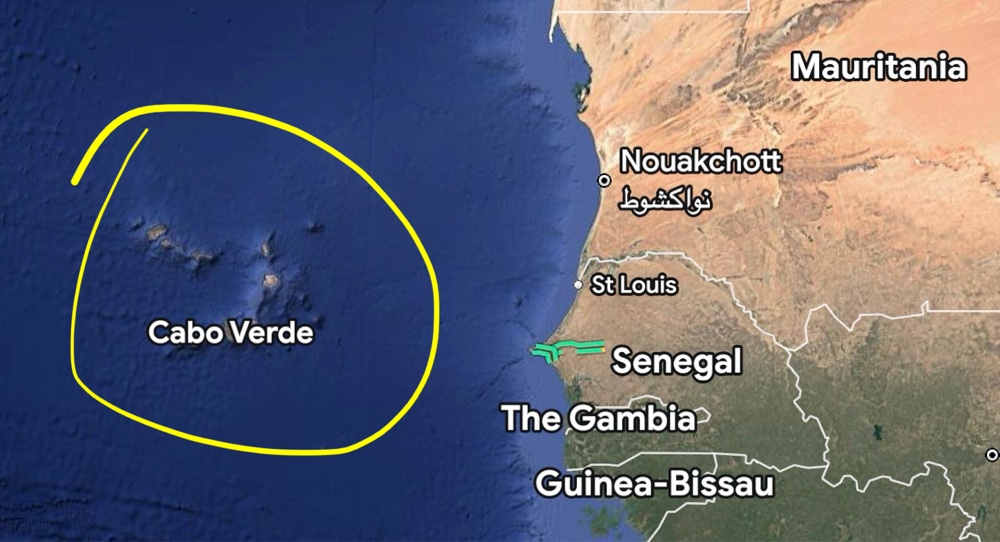
The location of Cabo Verde, in proximity to the African continent. It is 850km from the westernmost point of Africa. That’s where we are headed from Halifax!
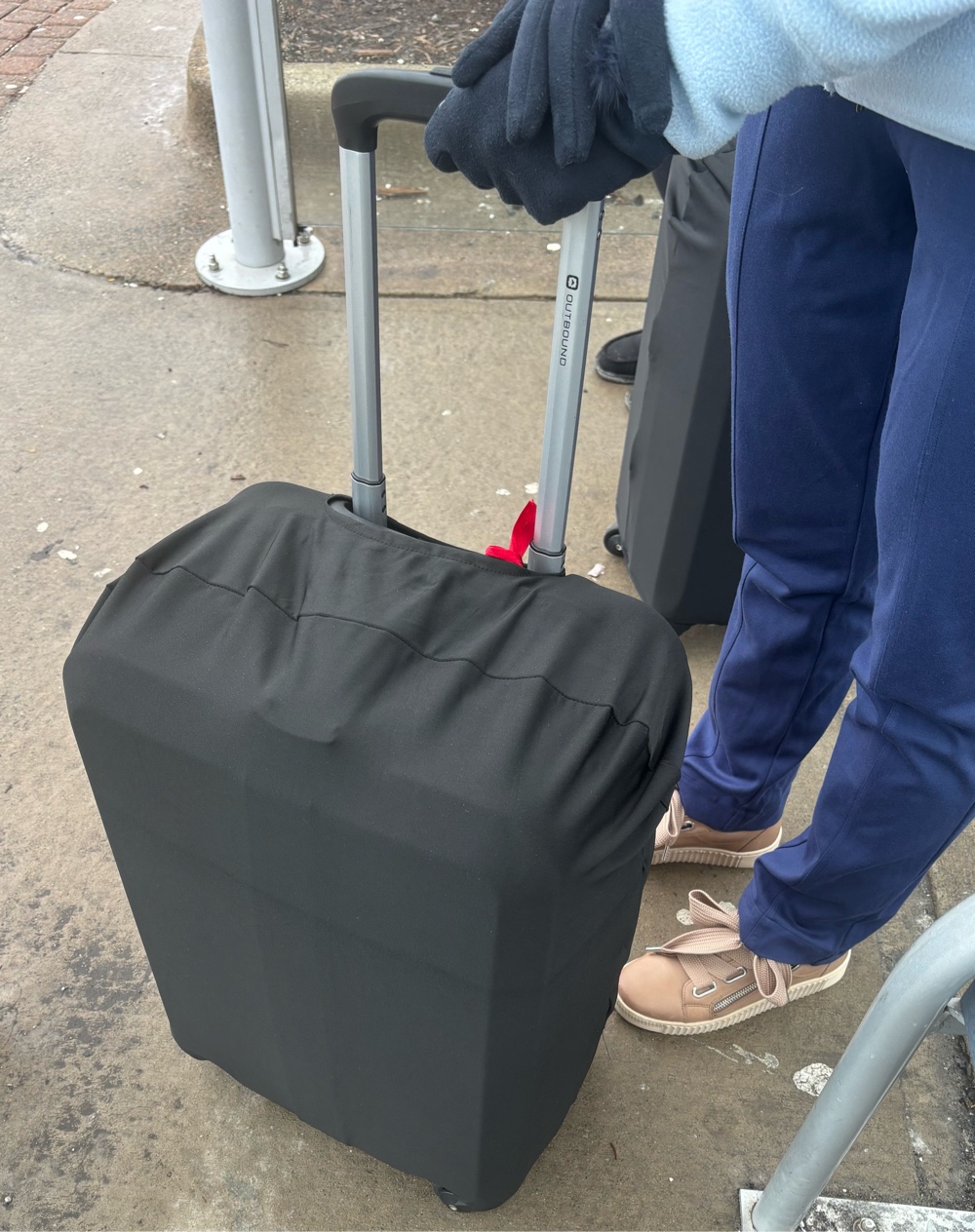
Our new carry-on covers are being christened on this trip. They do a great job of protecting a suitcase. These came with a large opening on each side, to accommodate side handles on the case. As our cases don’t have side handles, the openings would have simply been an opportunity for the covers to be snagged in transit. So our good friend, Juliet, sewed up the openings for us at the last minute. Greatly appreciated, Juliet!
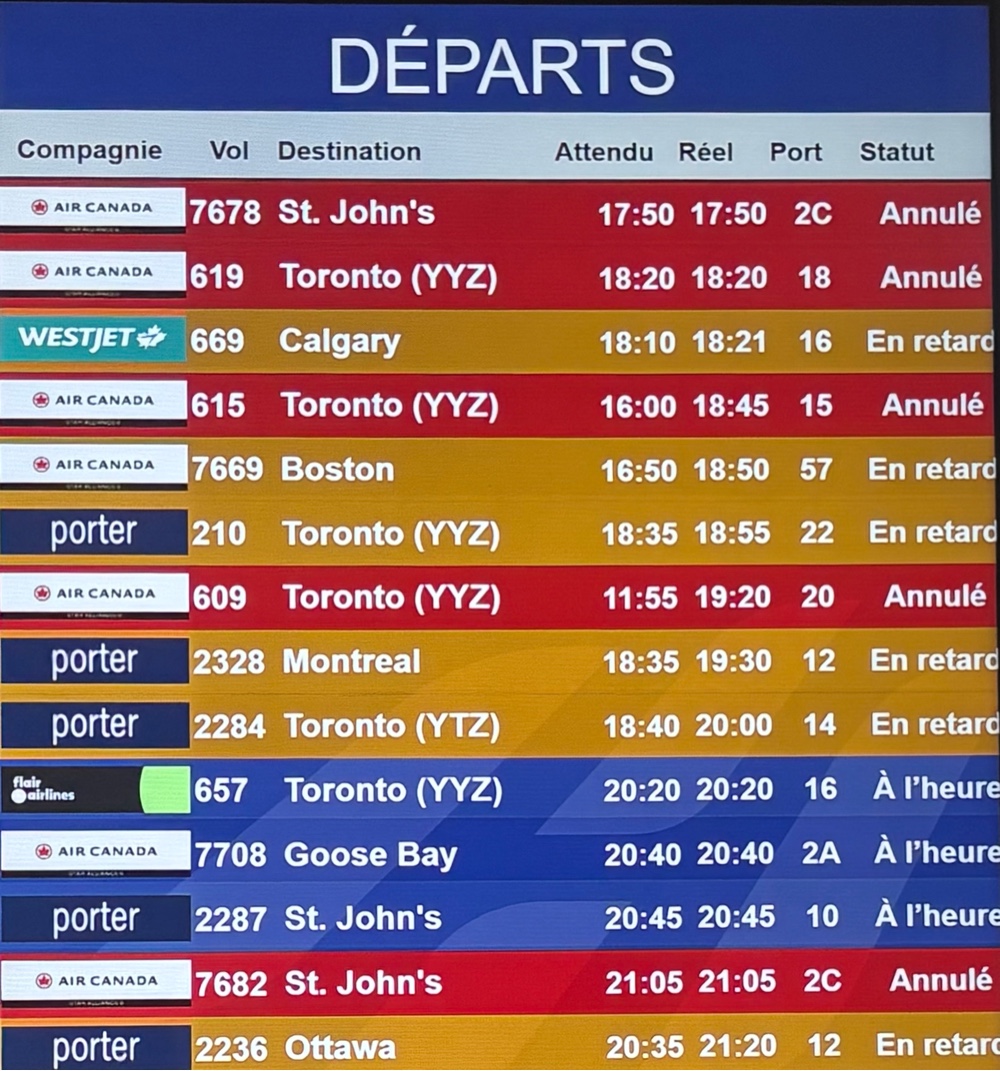
The departures screen at Halifax International when we arrived there. We were so fortunate that our flight was not among the many cancellations.
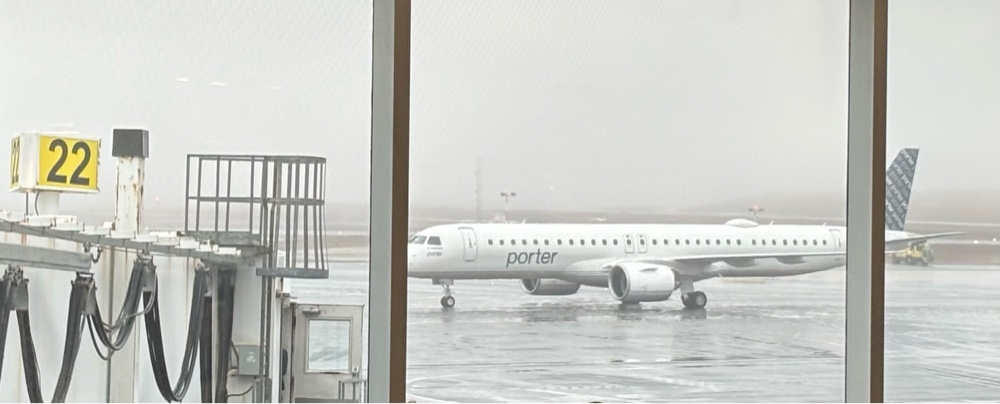
Our Porter Airlines Embraer 195 pulling into the gate. It was 30 minutes late getting in from its Orlando-Halifax run.
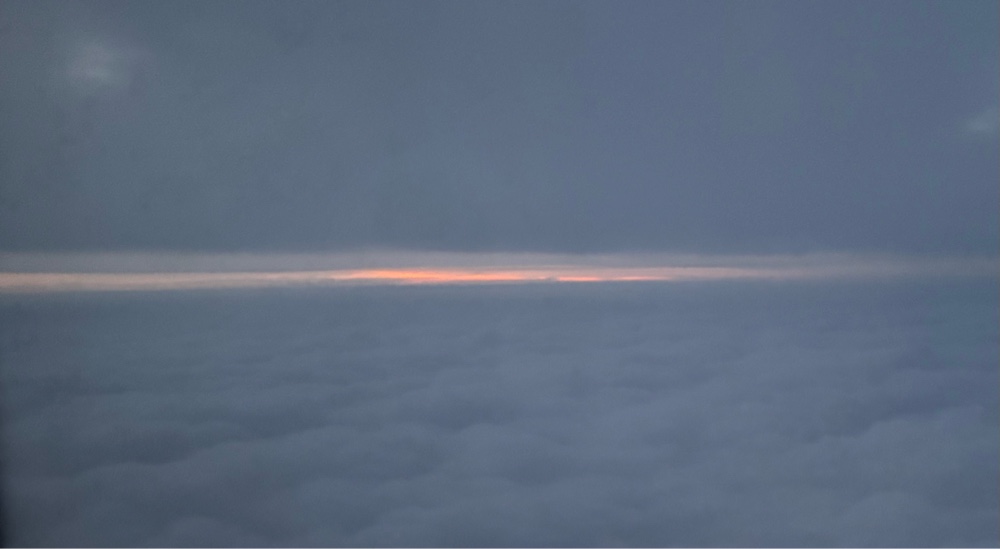
The dusk view from our flight at 8PM. It’s amazing that the days are now so long!
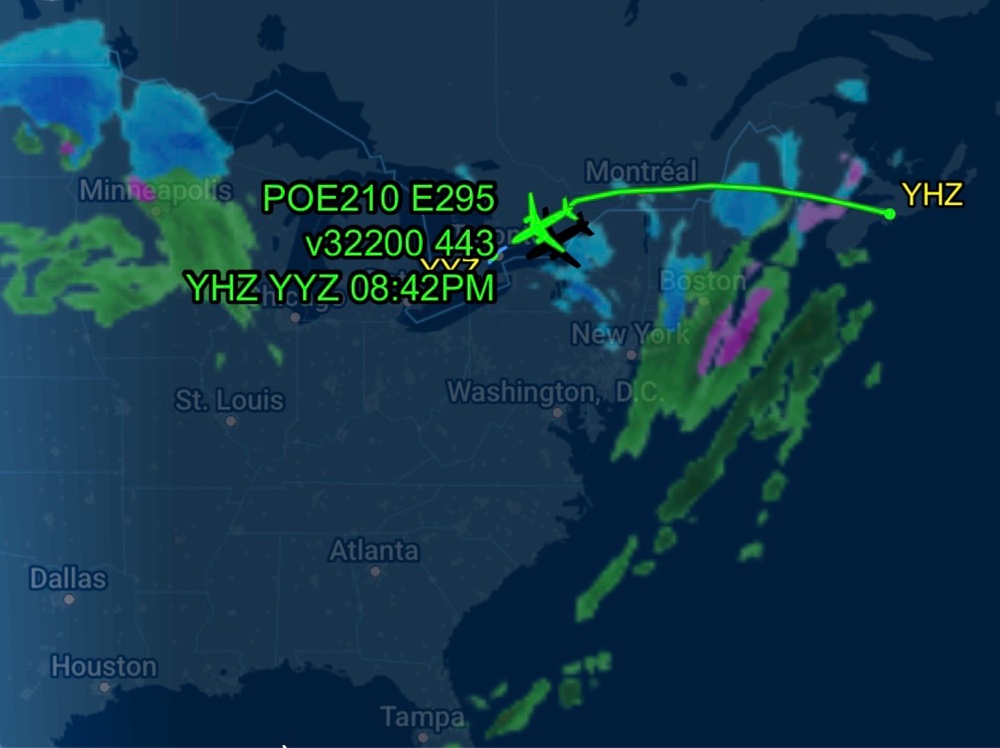
As you can see by the blue / green/ purple weather systems above, both Halifax and Toronto both luckily skirted the nasty weather.
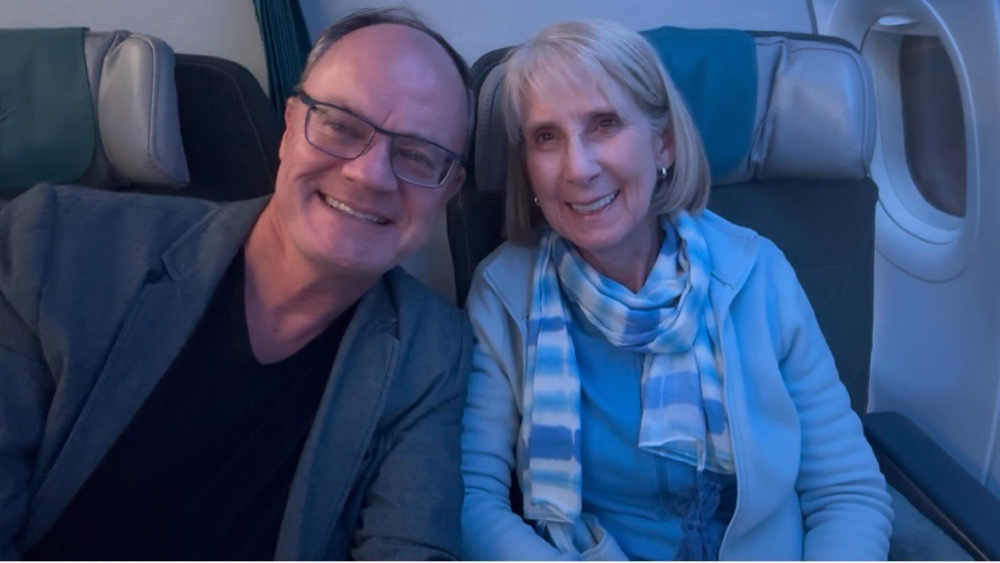
We were so relieved to plunk down in our Azores Airlines seats in Toronto, especially after receiving their text message upon landing in Toronto that they were giving away our seats because we were late! Last night, we made a last-minute bid for a Business Class upgrade, which was accepted. The flight was packed, so it was so nice to have the large seats in a quiet cabin to get some rest during the 5.5 hour overnight flight. Both of us actually slept for two hours.
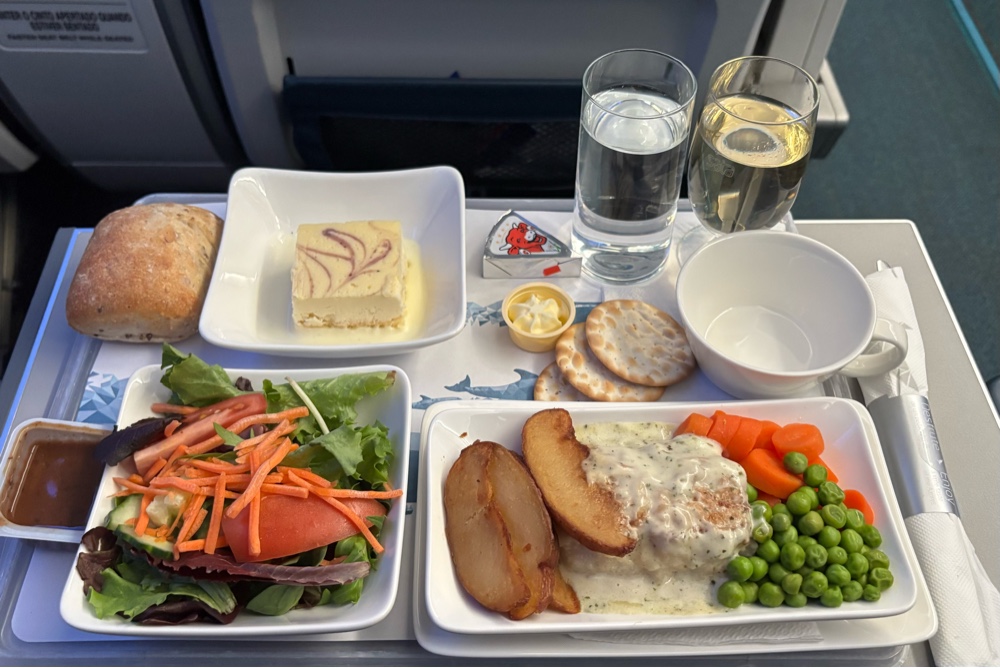
Azores Airlines has actually stopped serving meals in Economy Class on its trans-Atlantic flights. But, in Business Class, we were offered a midnight meal of tilapia, which was quite delicious.
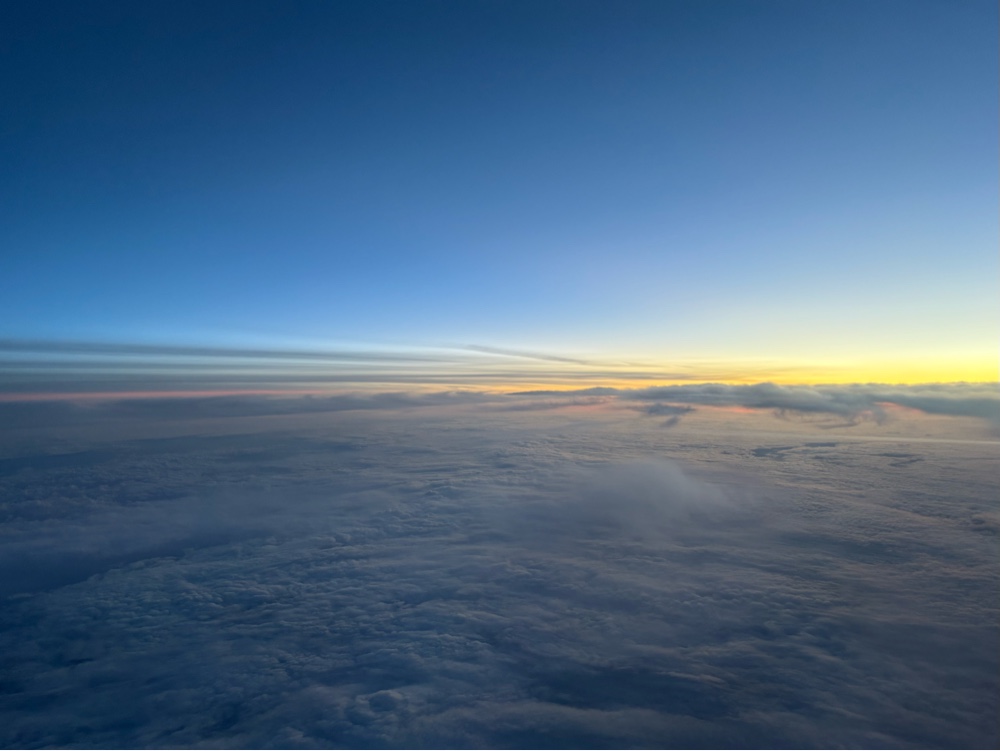
The dawning day at 6AM over the Atlantic Ocean.
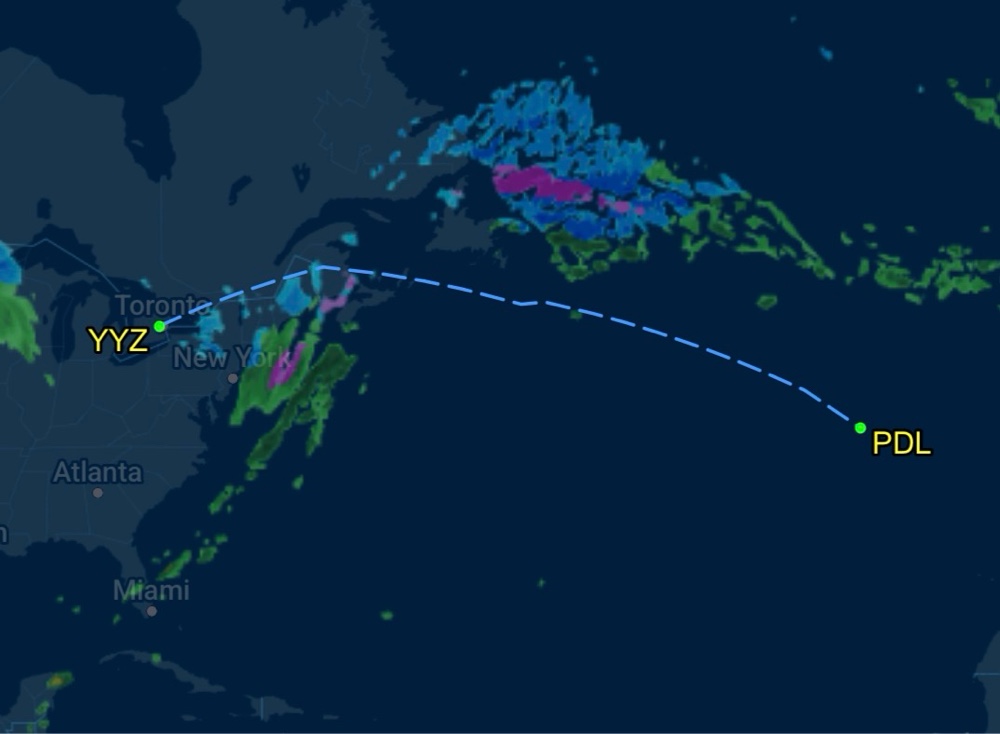 The flight path from Toronto to the Azores. Once again, the nasty weather was just above our flight path!
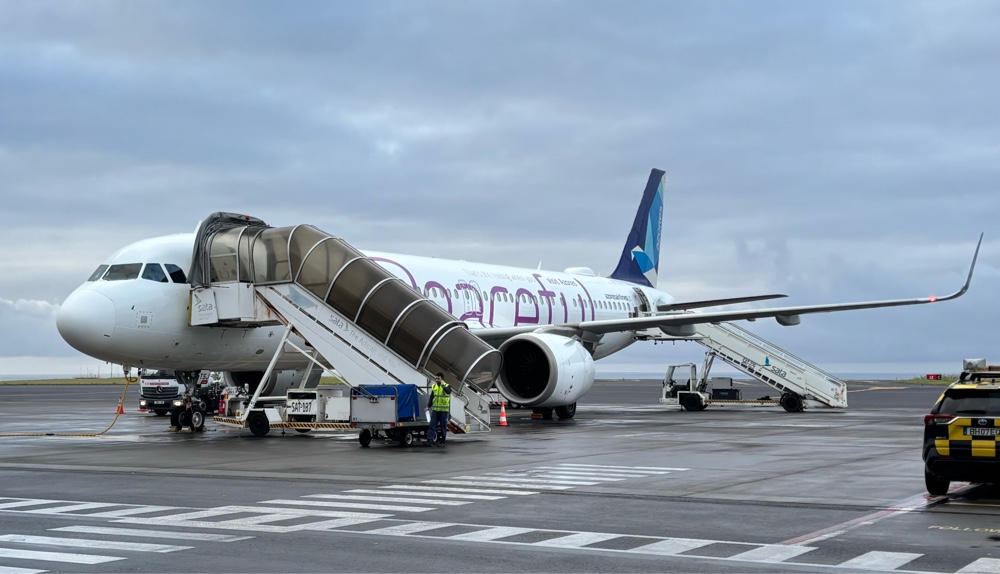 Each of Azores Airlines’ Airbus A-321neo aircraft has a word painted on the fuselage to depict an aspect of Azorean life. Our Toronto-Ponta Delgada plane sported the word “peaceful”.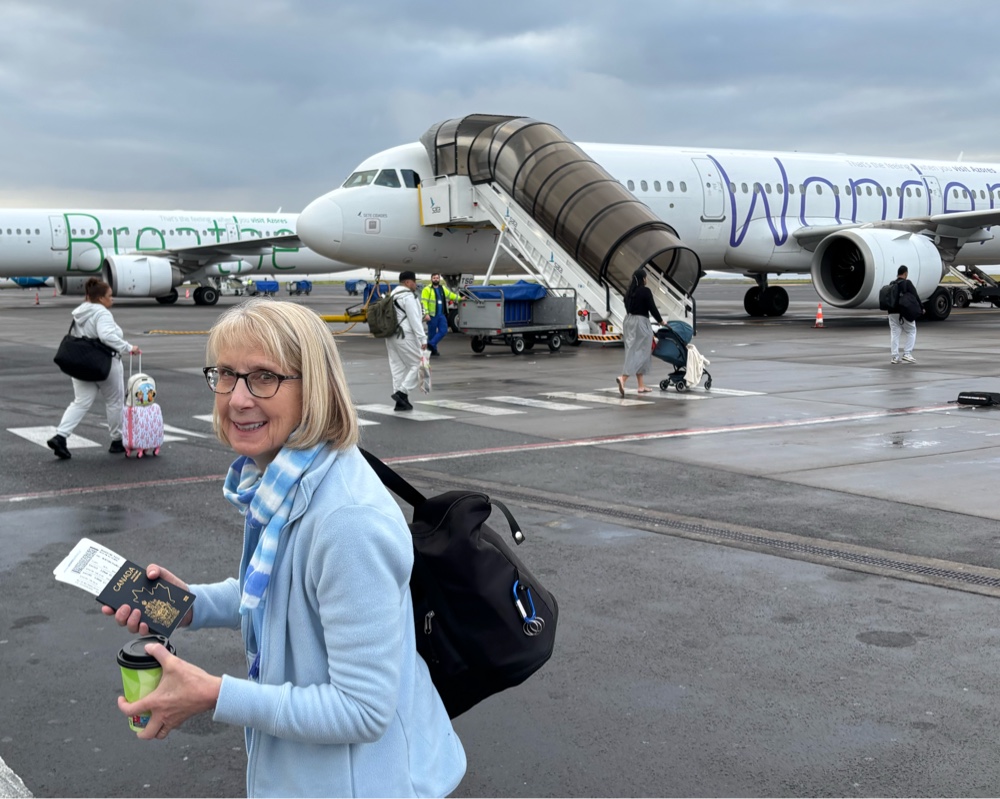
It was a quick turnaround in Ponta Delgada. Equipped with much-needed lattes for the early morning flight, here is Pam walking towards the Airbus A-321neo marked with the word “wonder”.
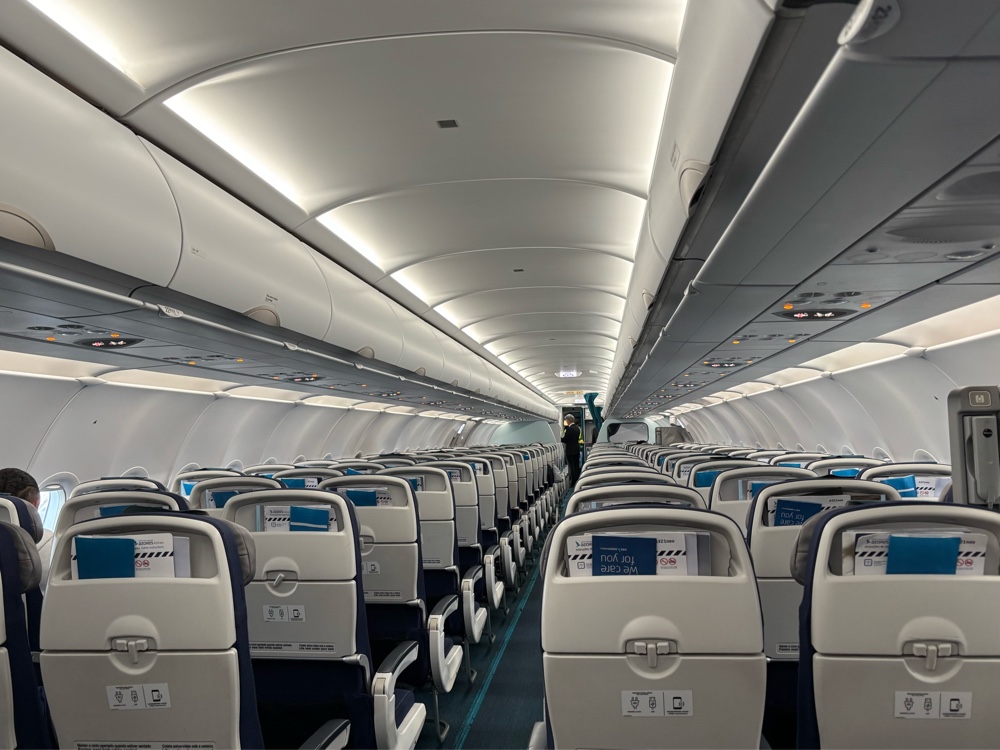 The flight from Ponta Delgada to Cabo Verde only had around 40 people on board.There was lots of room to spread out.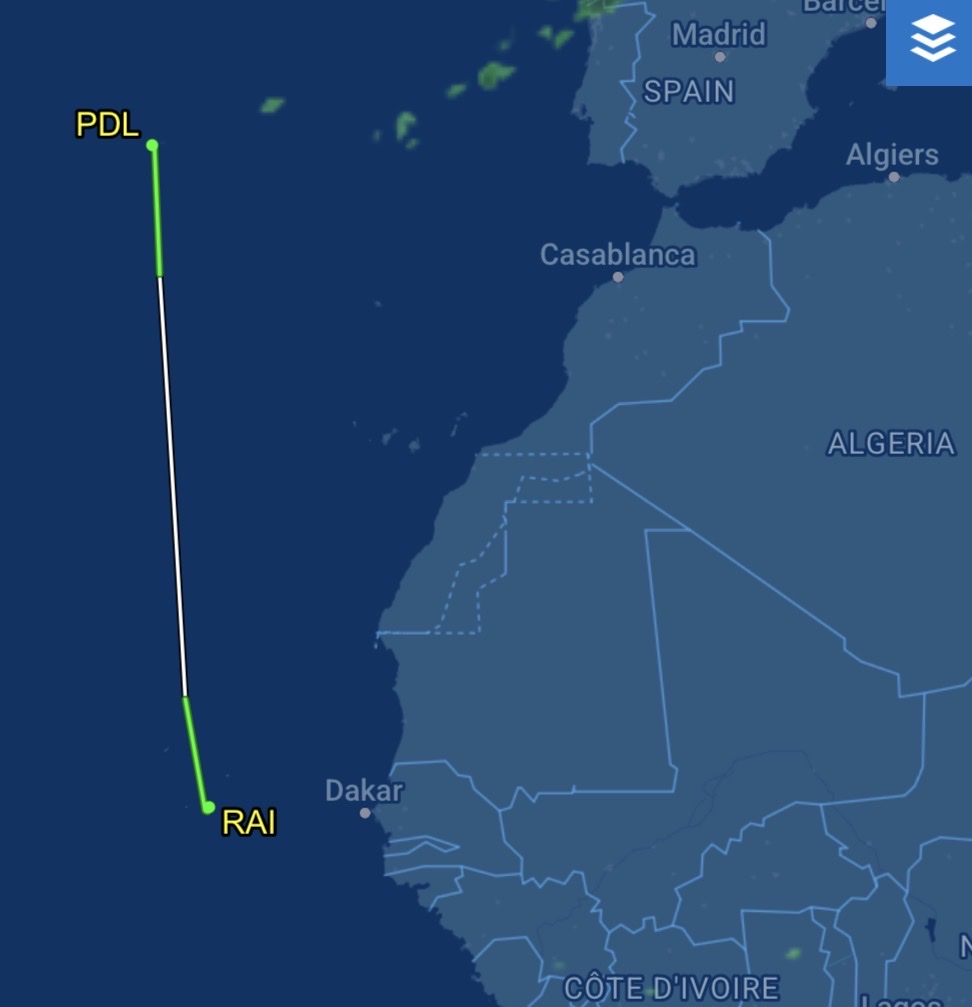
The Azores Airlines flight from Ponta Delgada was a 3.5 hour jaunt straight south to Cabo Verde.
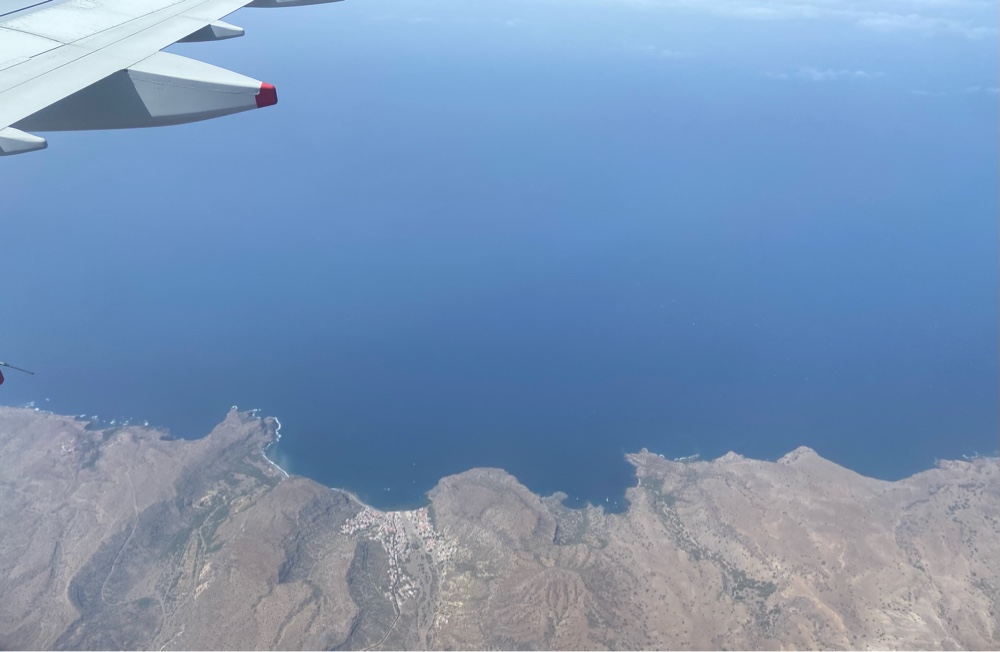
Our first sight of Cabo Verde land was over the sparsely populated Ihla de Sao Nicolau (St. Nicholas Island) in the north of the country.
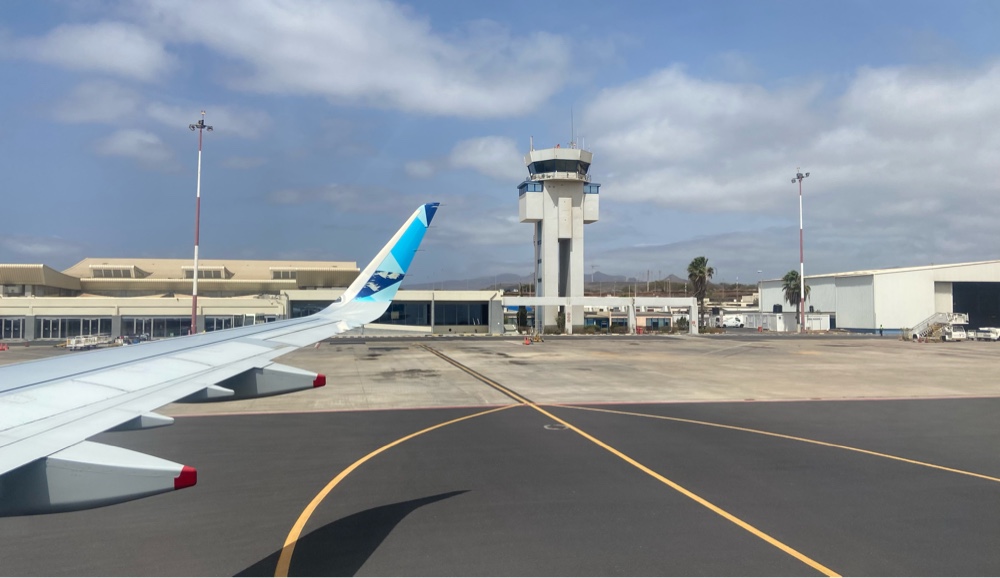 Landing at Nelson Mandela International Airport in Praia, capital of Cabo Verde.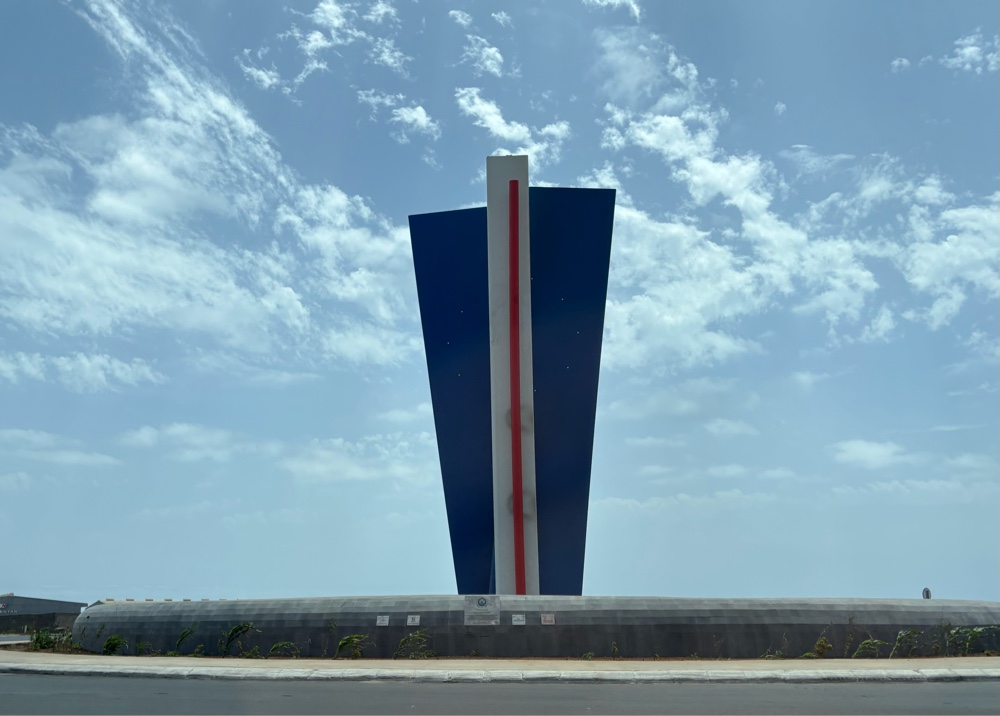
Enroute from the airport into the city, one passes the Democracy Monument, which shows the colours of the Cabo Verde flag. The blue panels represent sea and sky; the two white panels represent peace and liberty; and the rad panel represents the blood of sacrifice. This flag was adopted after the country gained independence from Portugal in 1975.
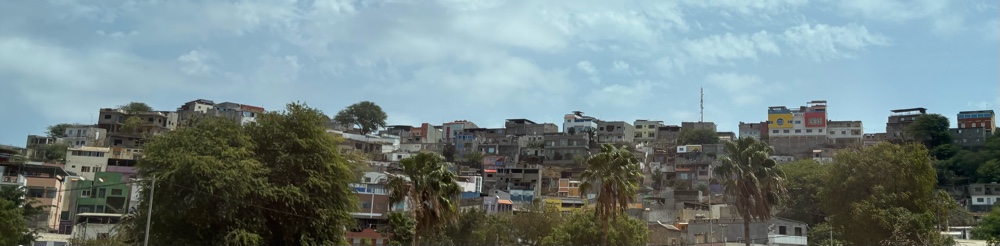
Praia has many hills. These are typical apartment buildings, as seen on the cliffs of the Grande Frent neighbourhood.
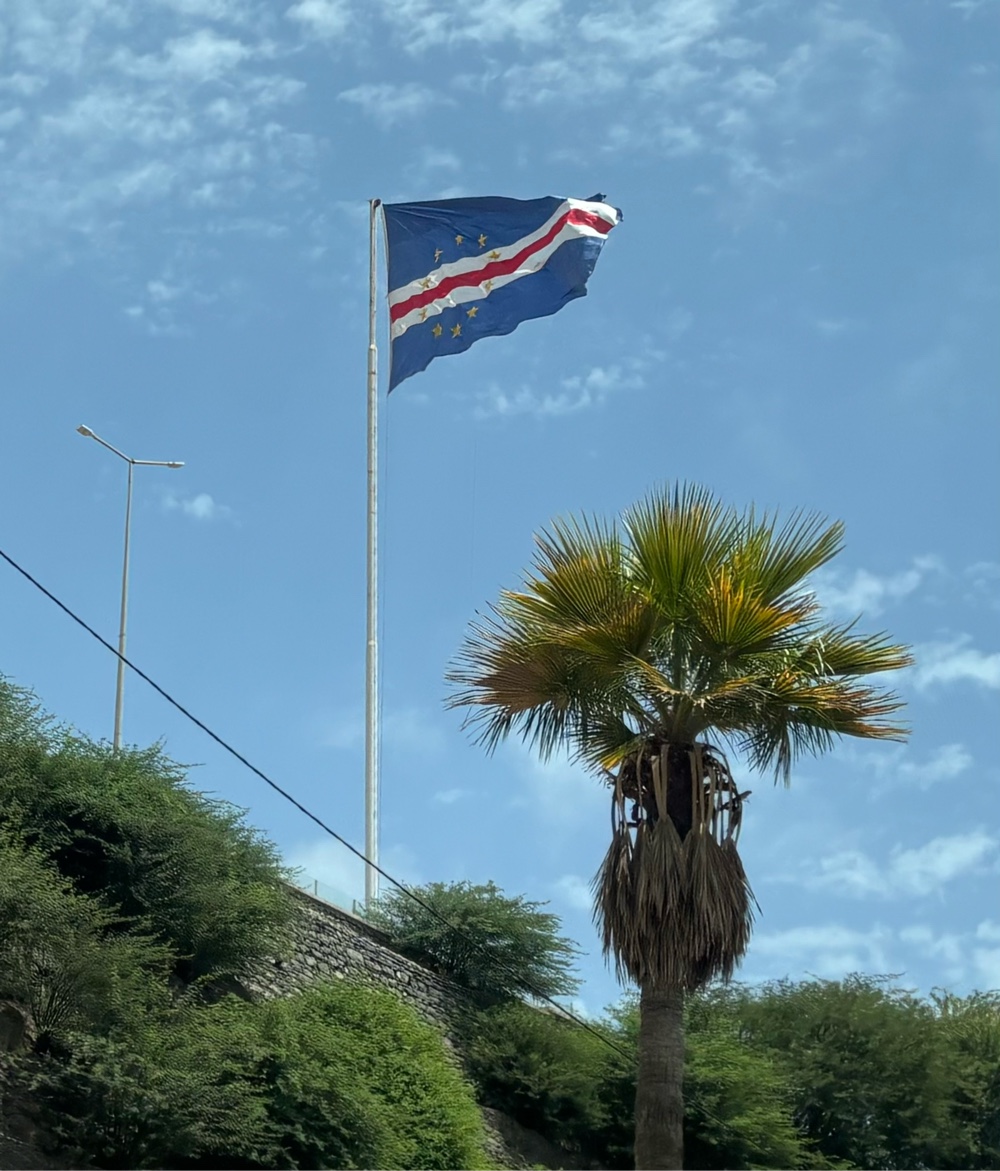
This giant flag of Cabo Verde is located in Plato (“plateau”, one fo the city’s main neighbourghoods.
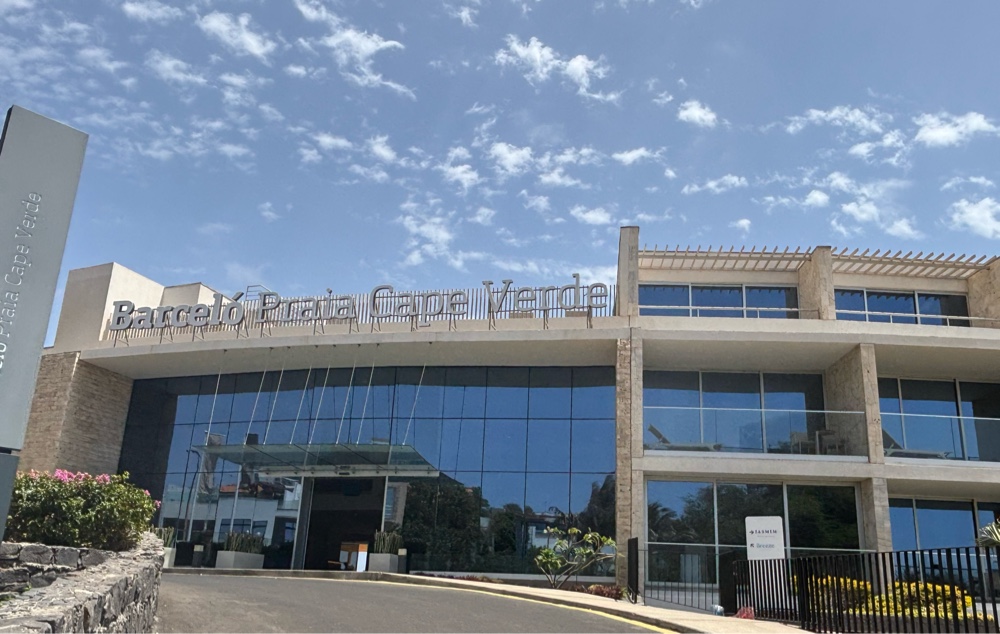 The Barcello Praia Cabo Verde - our accommodations for the next three nights.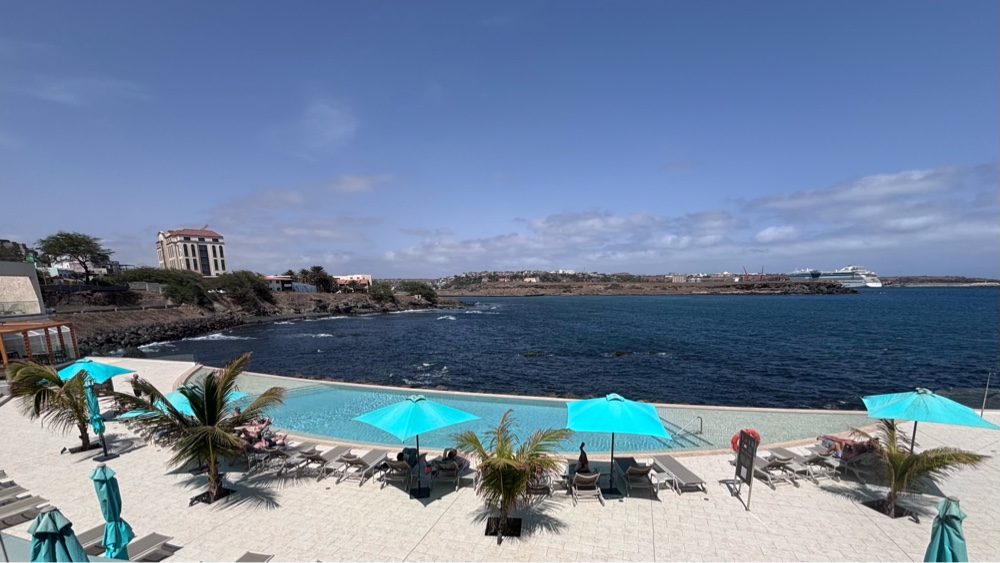
The view from our room, overlooking the infinity pool and the port.
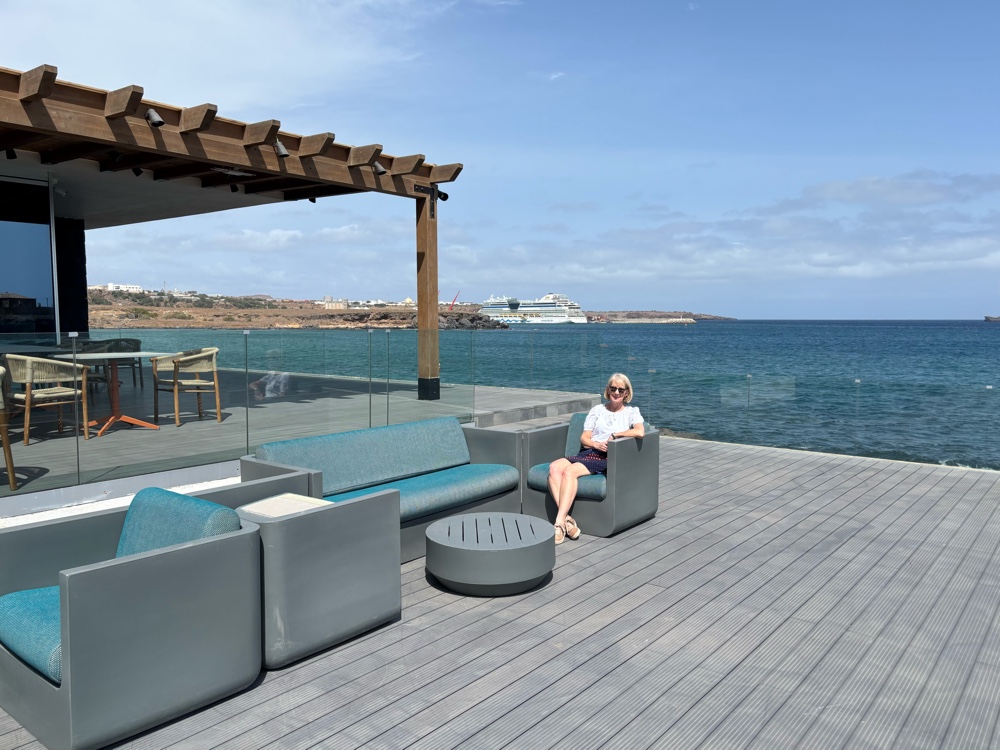
Taking in the sights on the patio of the Barcelo,
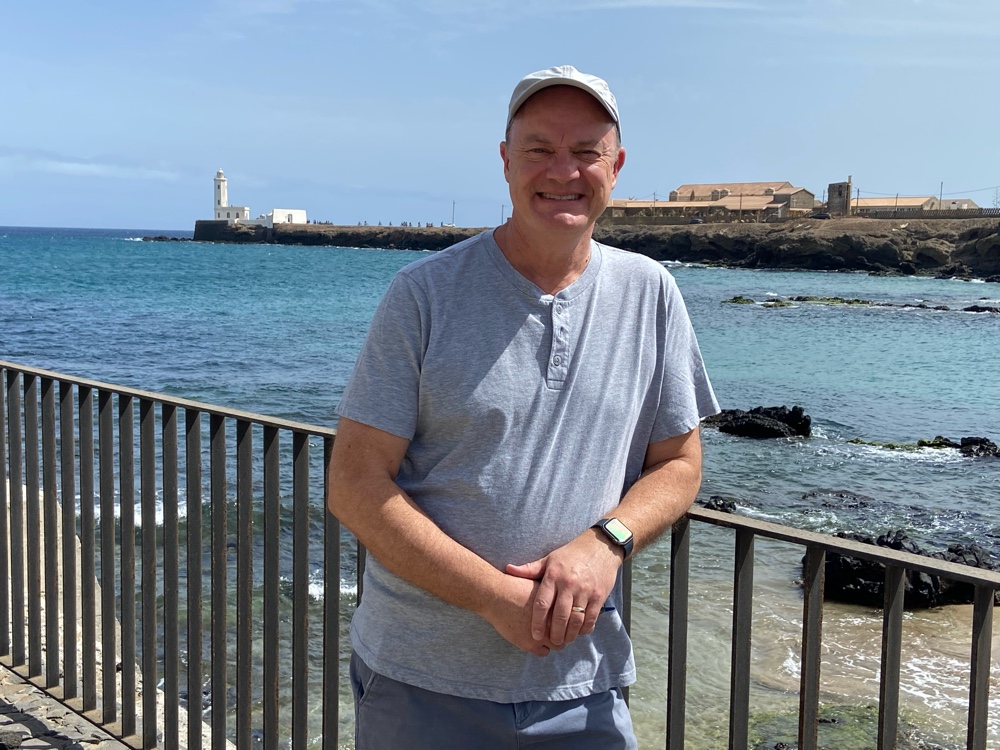
Farol (“lighthouse”) Dona Maria Pia is a stone’s throw from the hotel.
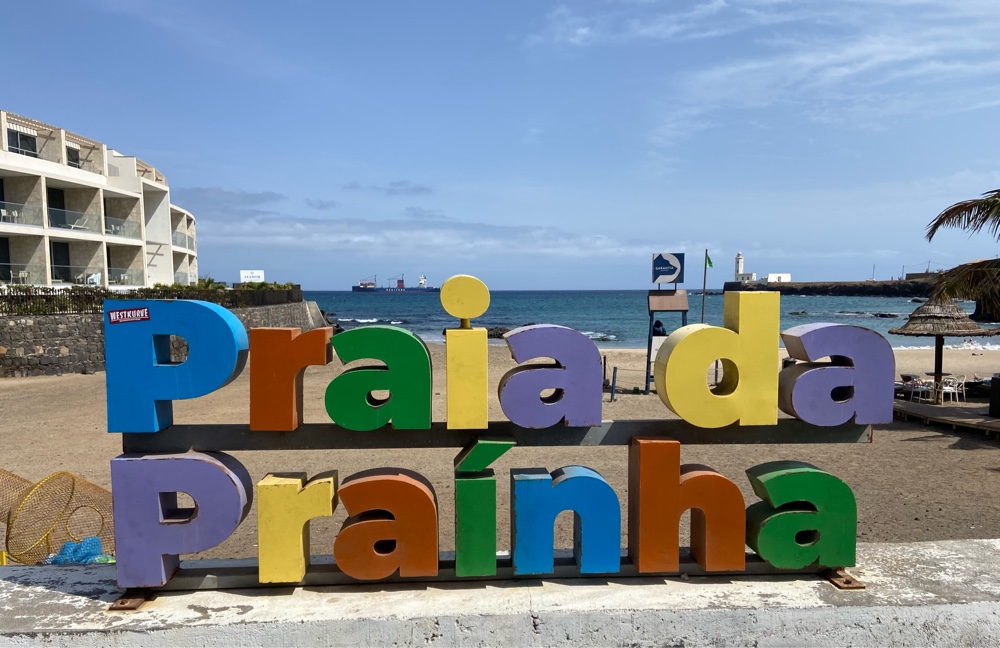
Praia (“beach”) da Prainha is a small but popular beach adjacent to the hotel.
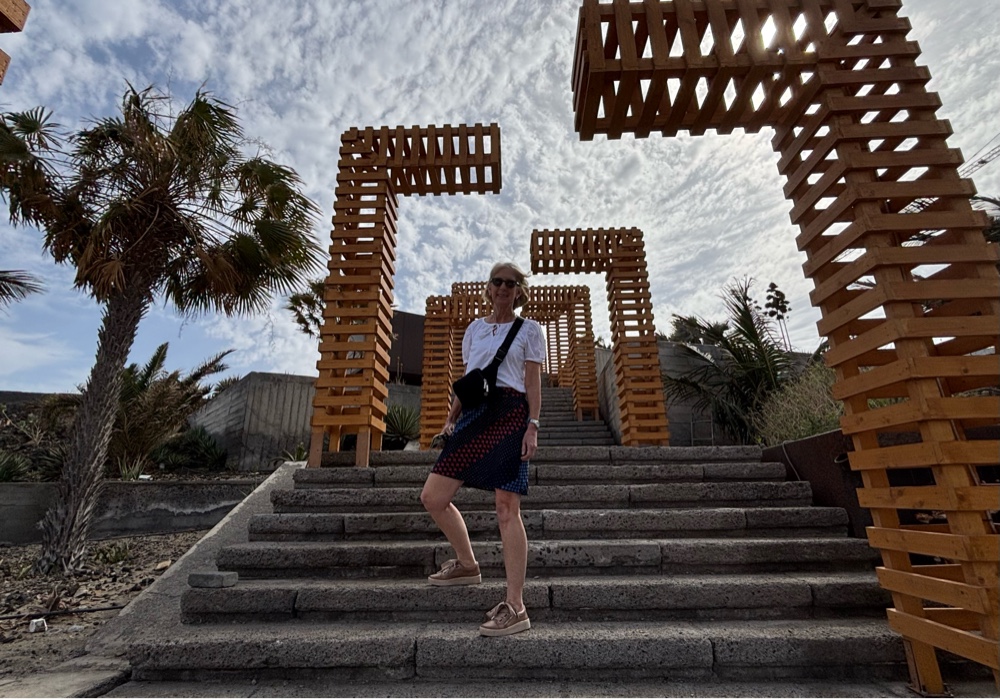
The steps up from Praia da Prianha.
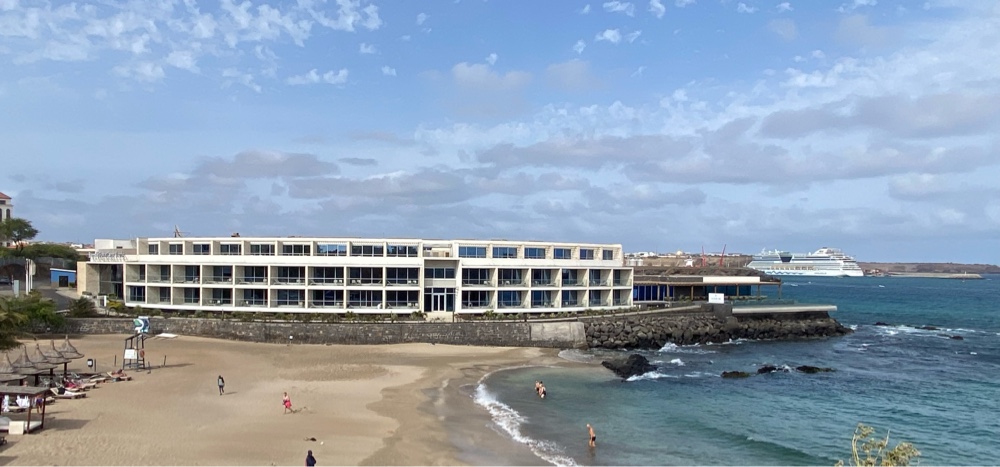
A view of the Barcelo, from Praia da Prainha.
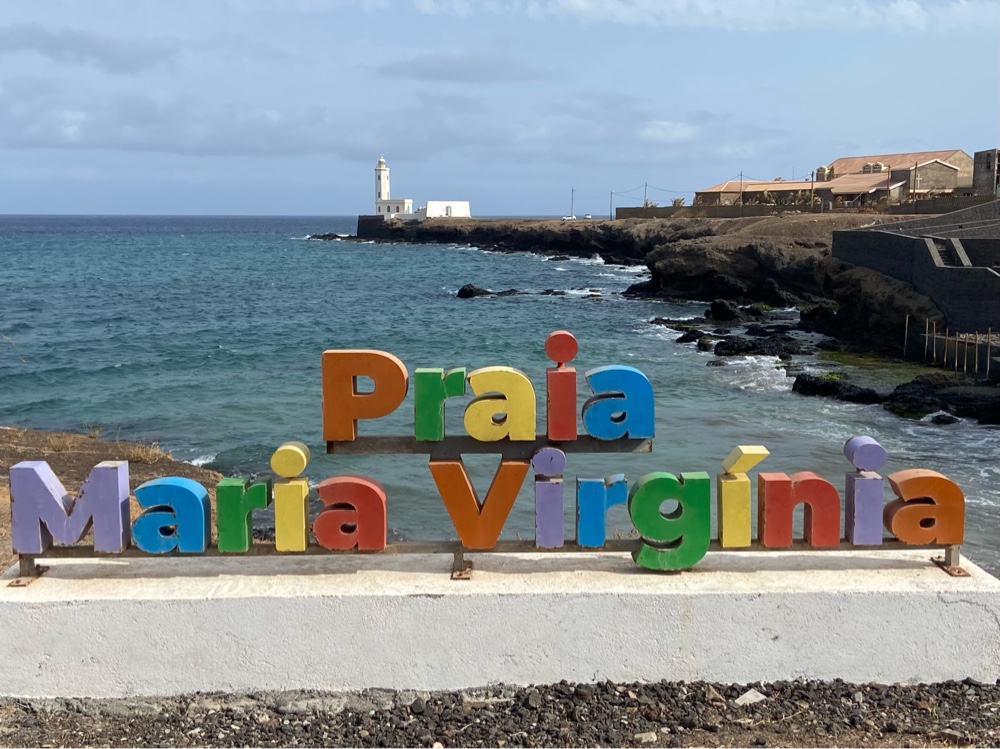
Another small beach, Praia Maria Virginia, is located between the hotel and the lighthouse.
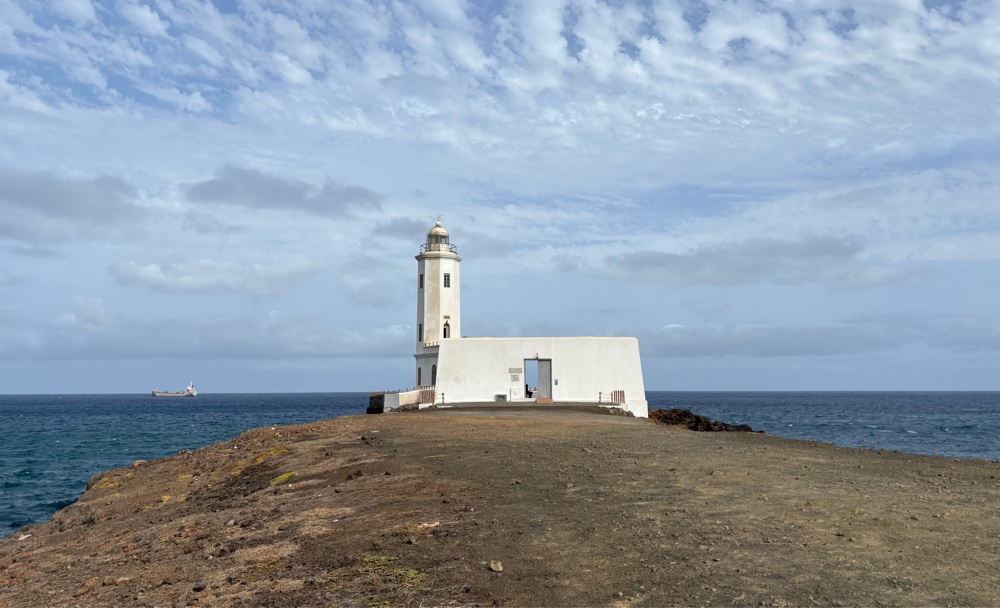
Farol Dona Maria Pia..
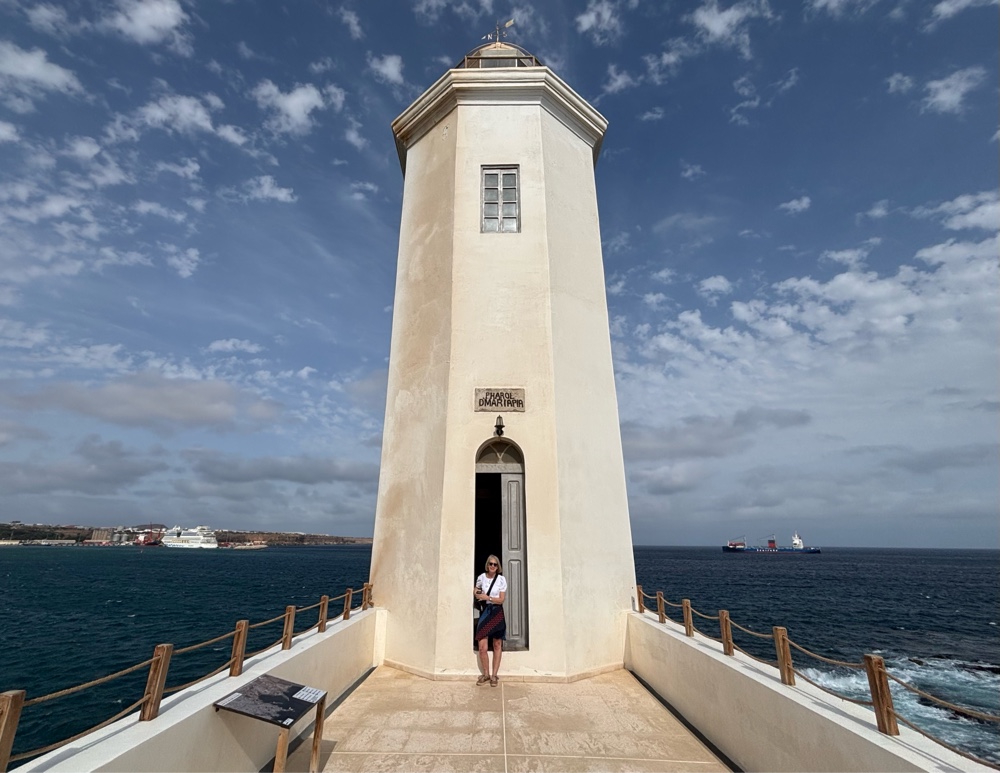 The lighthouse has been beautifully restored. It was built in 1881.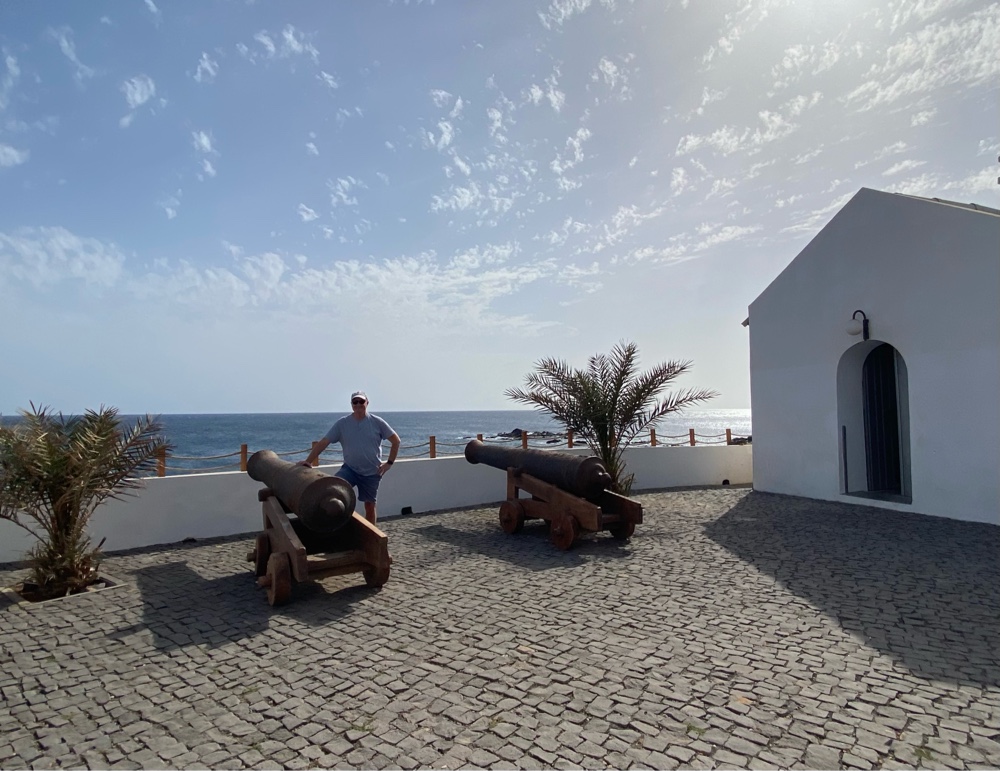
Canon at the lighthouse. Most the canon that defended the port of Praia were taken from shipwrecks. Although the port was a welcome and safe haven, during the rainy months of August to October, it proved a treacherous port to access, as it was exposed to strong winds from the south and southeast. As a result, 20 ships were wrecked just outside the port from the 17th to 20th centuries,
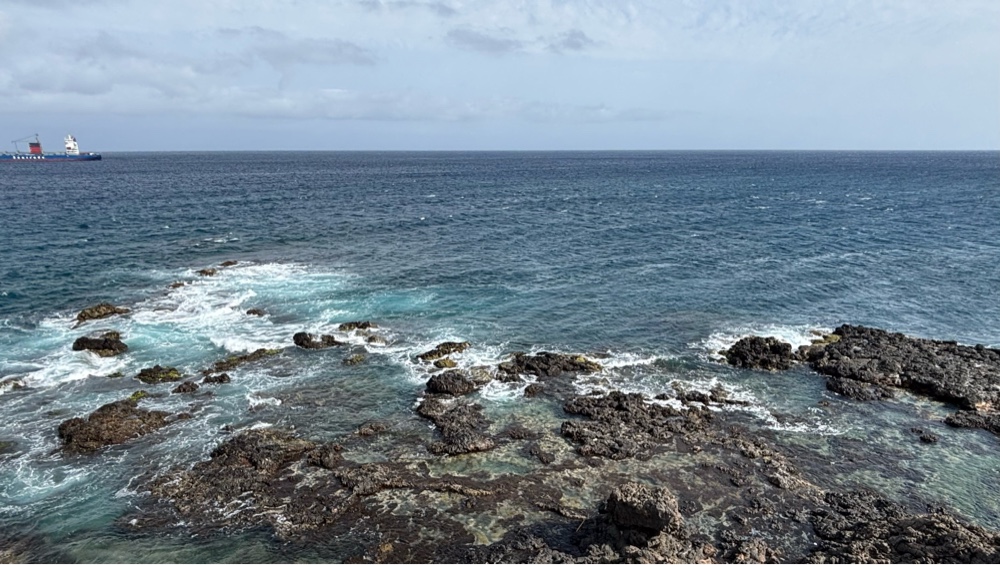
The shallow waters and lava stone of Ponta Temerosa, the name of the point where the lighthouse is located.
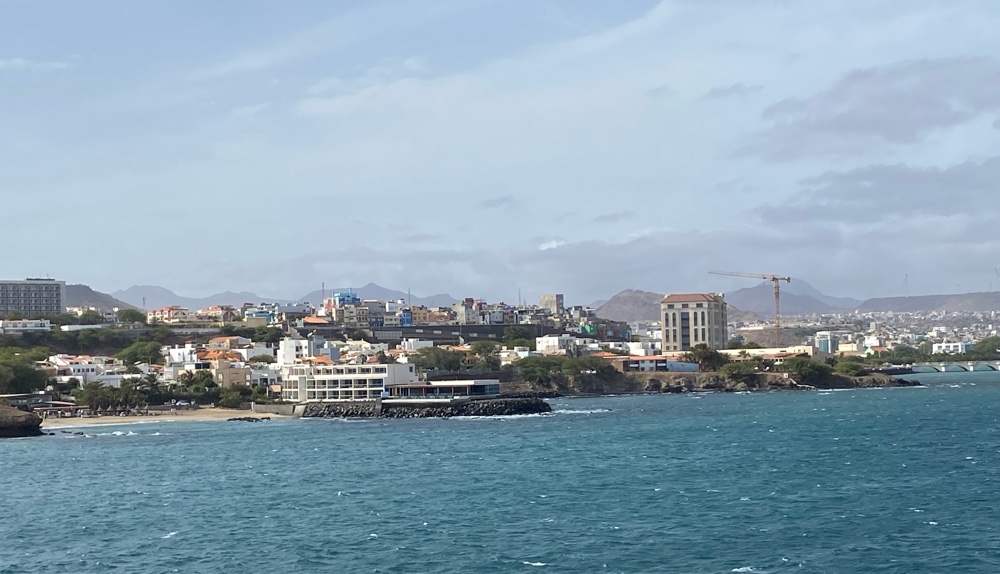
A view of Praia from the lighthouse.
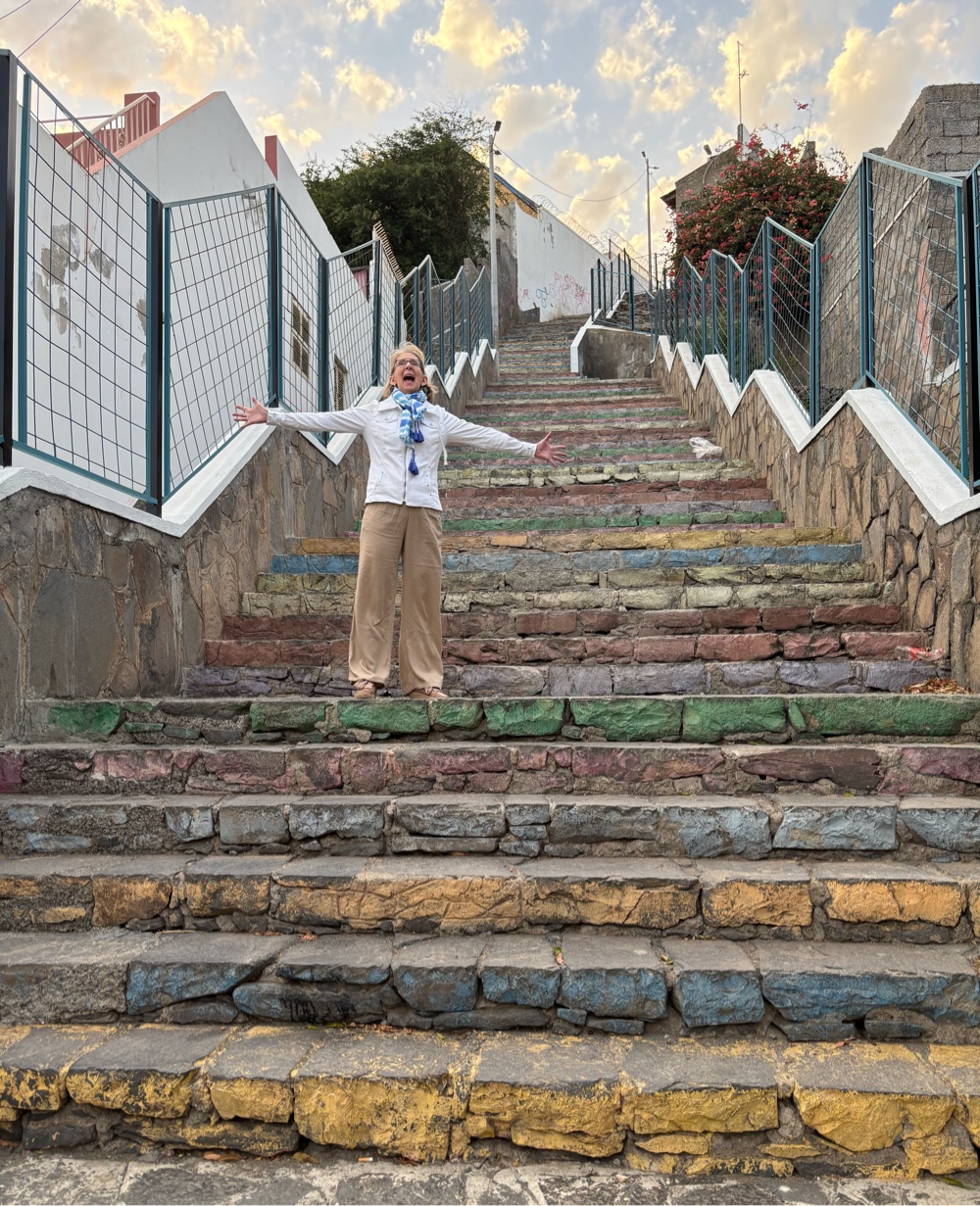
Ascending the stairs to Plato (“plateau”) in search of a place to eat dinner.
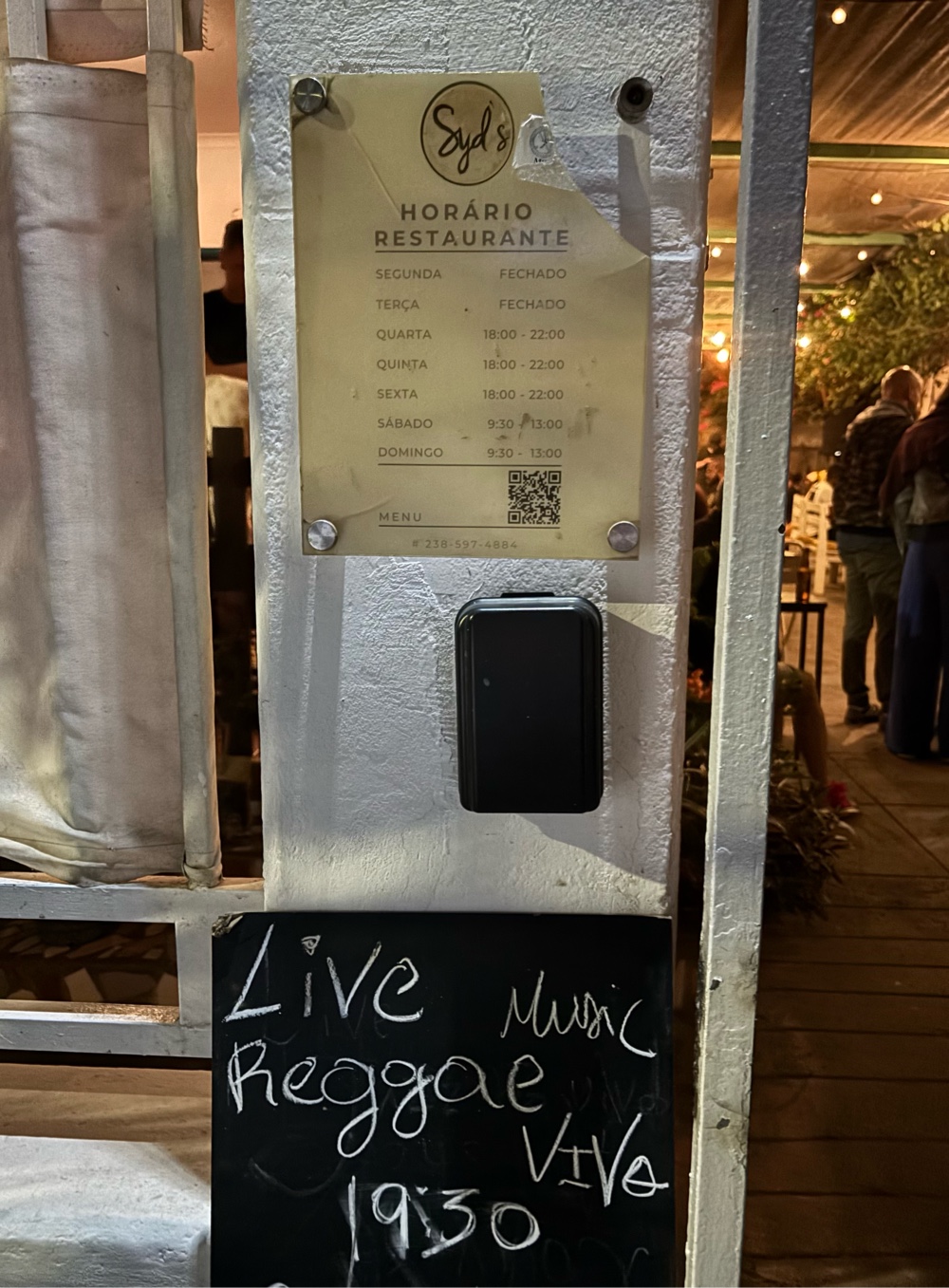
We eventually settled on a highly-rated place called Syd’s, which has the best tacos in Cabo Verde. We didn’t realize, until arriving, that this was Reggae Night. The place was packed and, at first, we were told there wouldn’t be a table.
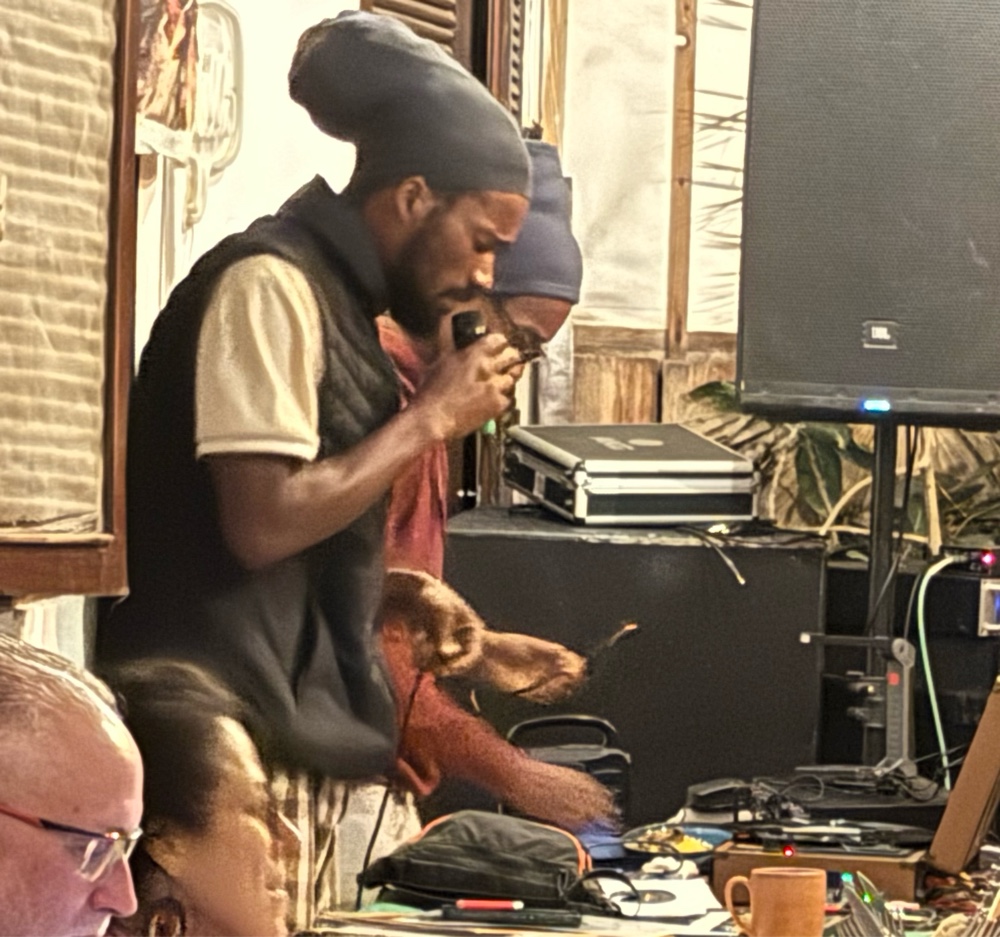
One of the Reggae singers.
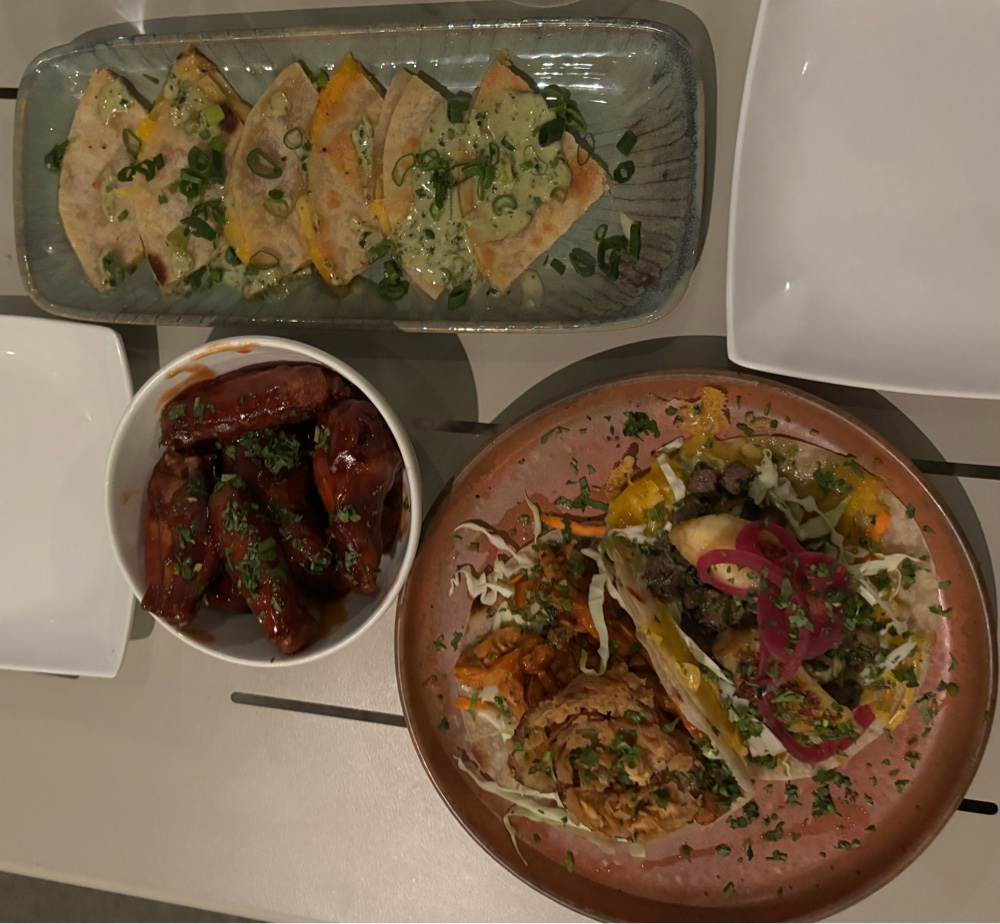
Pam’s quesadilla and my tacos, along with the best chicken wings we have ever eaten.


Comments
Post a Comment