We awoke feeling pretty tuckered from yesterday’s round-the-island tour. It was 10:30AM by the time we finished our leisurely breakfast and headed out to start our ‘Lonely Planet’ walking tour of Praia. A couple of hours later, we were on our way to Cidade Velha, which is the UNESCO ‘old town’, where we spent a couple of hours exploring. By 3PM, we were having lunch at a cafe overlooking Prainha Beach back in Praia. After that, we closed out the day relaxing by the hotel pool. Dinner was pasta at a neighbouring resort — and was nothing to write home about! ;-).
Tomorrow will be an early start, as we have a taxi booked for the airport at 6:30AM.
 |
| The view of the early morning sun from our room. |
Walking Tour of Praia
 |
| Papaya and dried Cape Gooseberries - both are very common in Cabo Verde markets. |
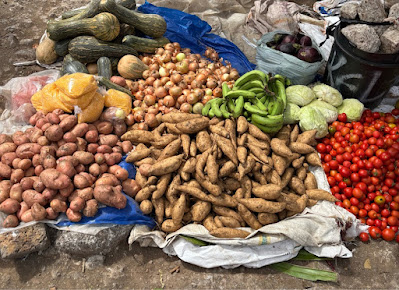 |
| Typical vegetables for sale at the market. |
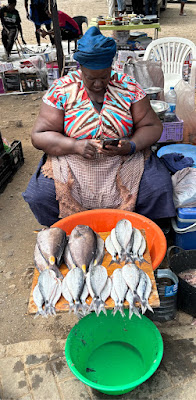 |
| A woman selling fish at the Praia Sunday morning market. |
 |
| The Sunday morning market in Praia. |
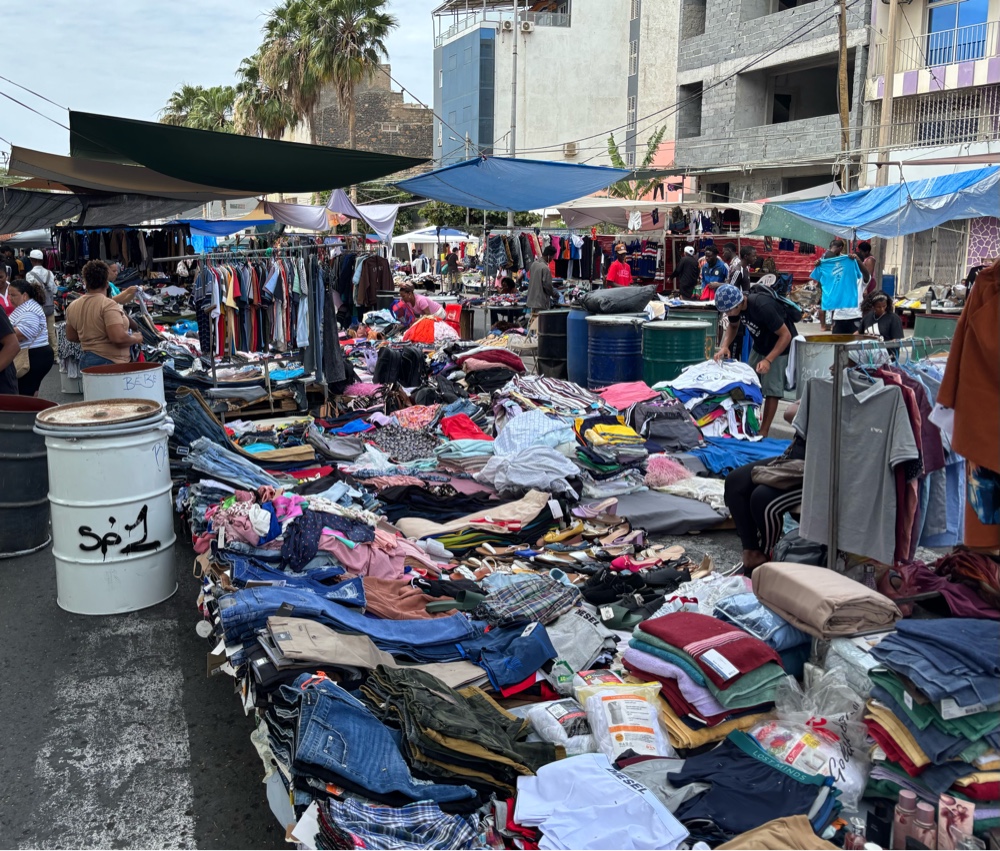
Enough used clothing for sale to make a person’s head spin! |
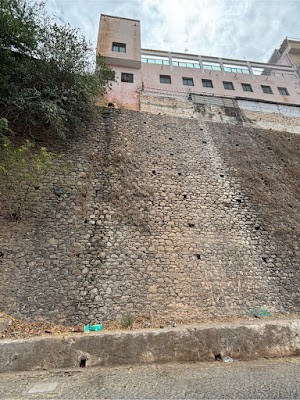 | | The neighbourhood of Plato (‘plateau’) is home to the city’s trendy cafes, shops, a tree-lined pedestrian zone, consulates, and the Presidential Palace. |
|
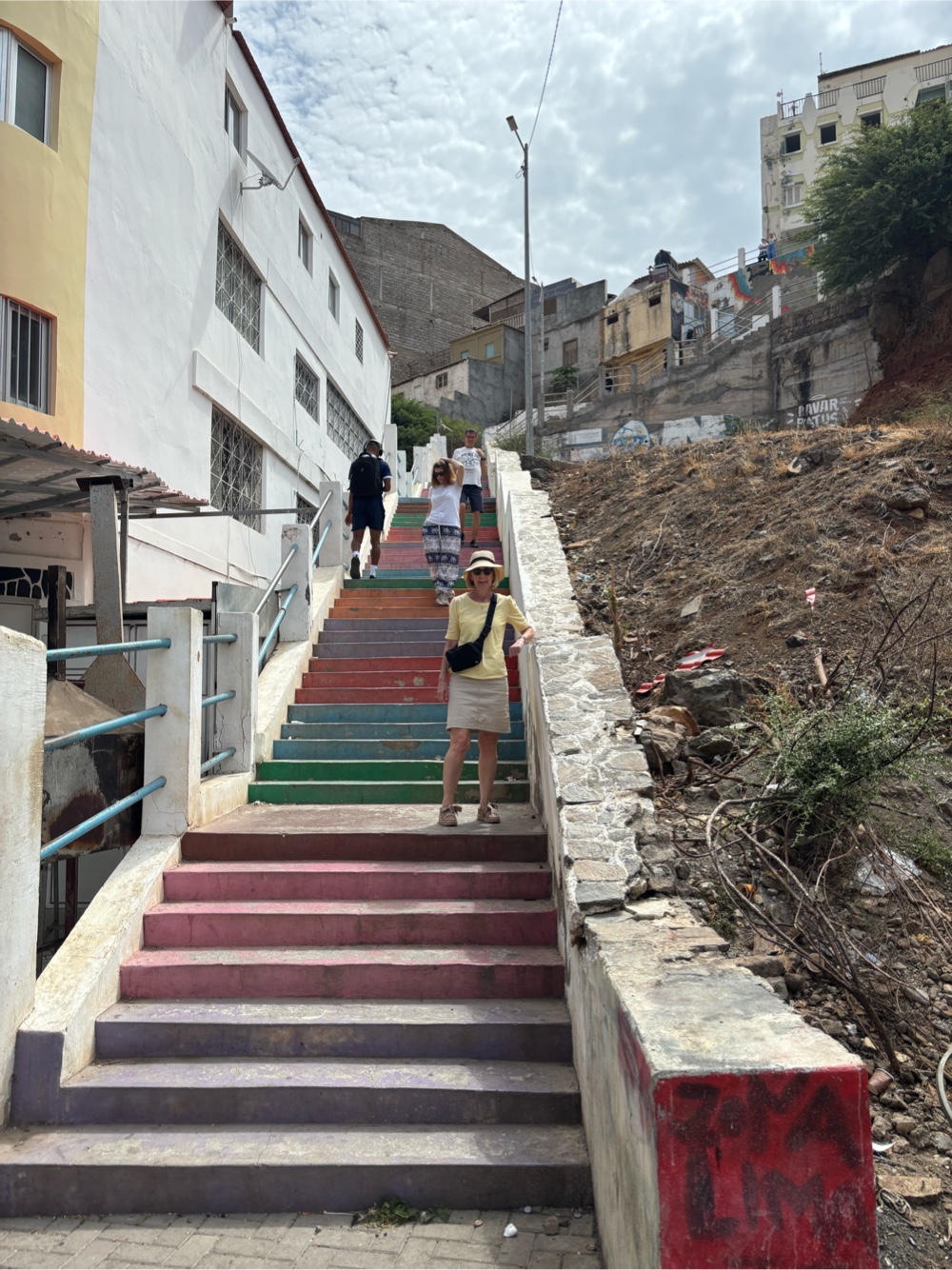 |
| The steps leading up to Plato. |
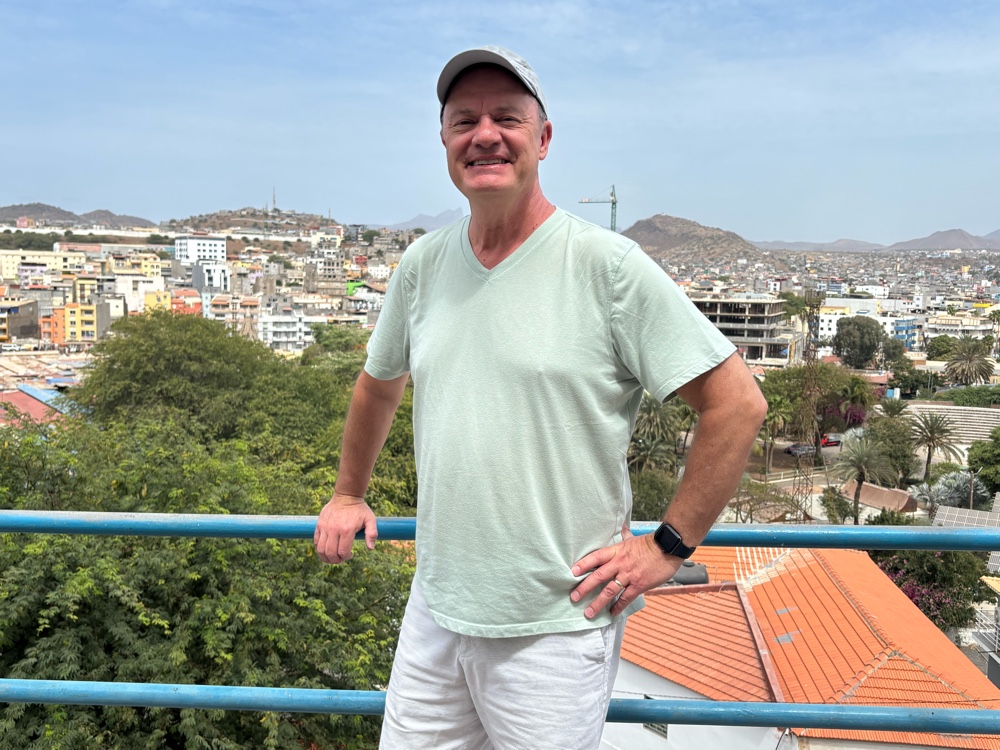 |
| Looking over the city from Plato. |
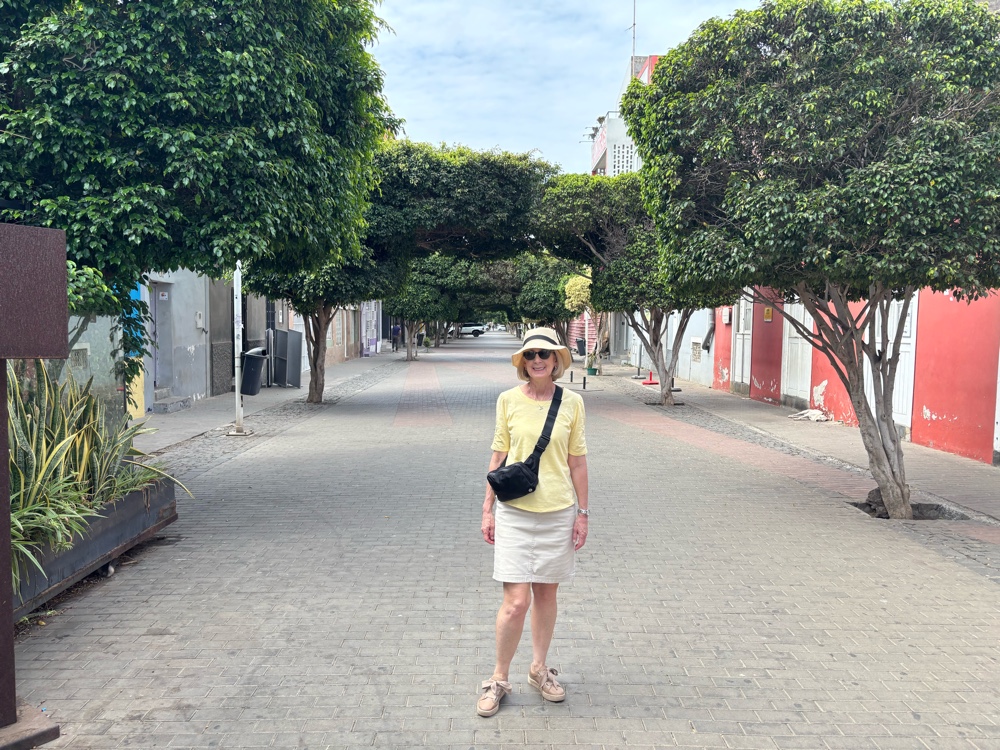 |
Pam on the tree-lined pedestrian zone of Plato.
 | | Praca (‘park’) Alexandre Albuquerque is the pièce de résistance of Plato, containing a fountain, sculptures, a cafe, etc. |
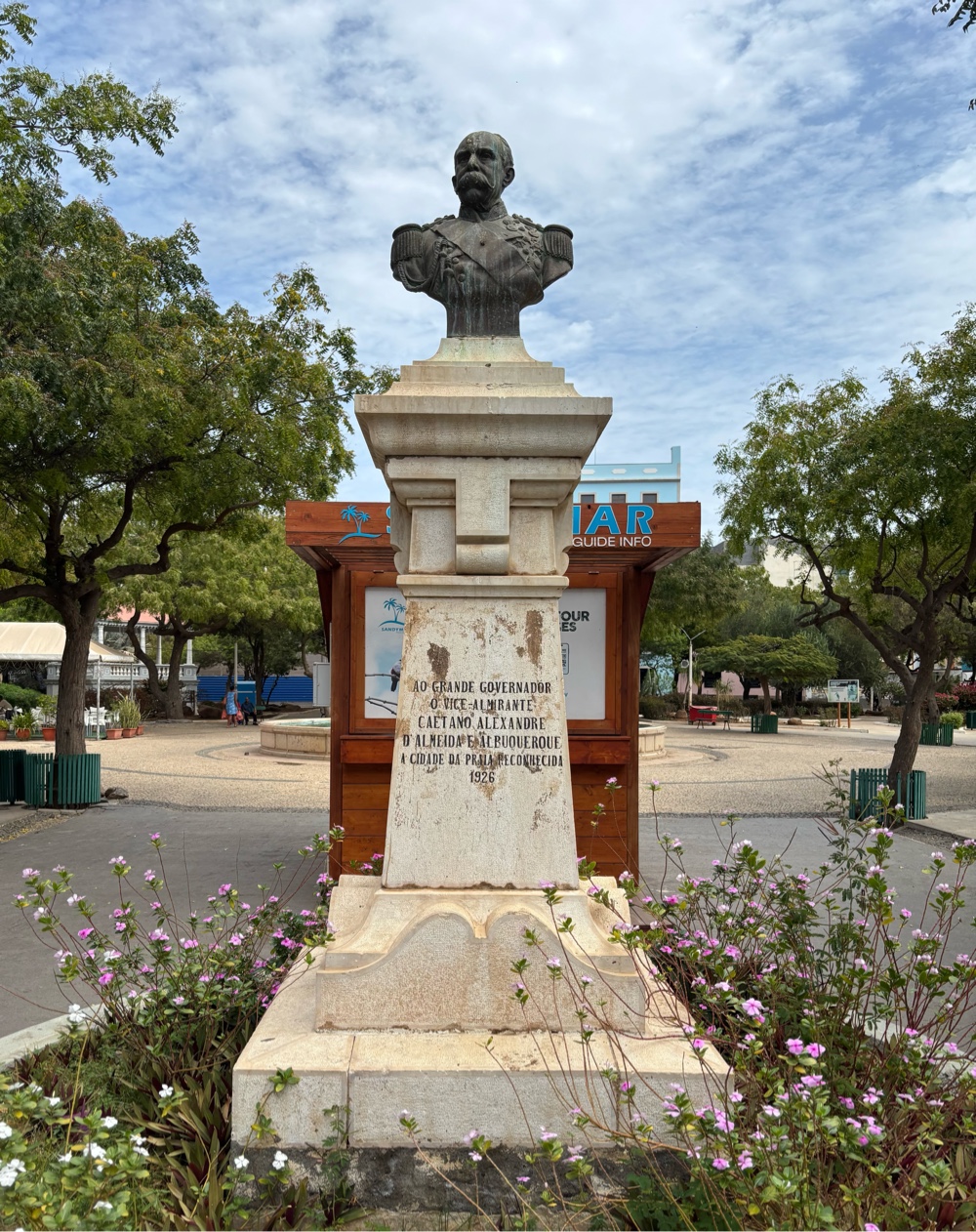
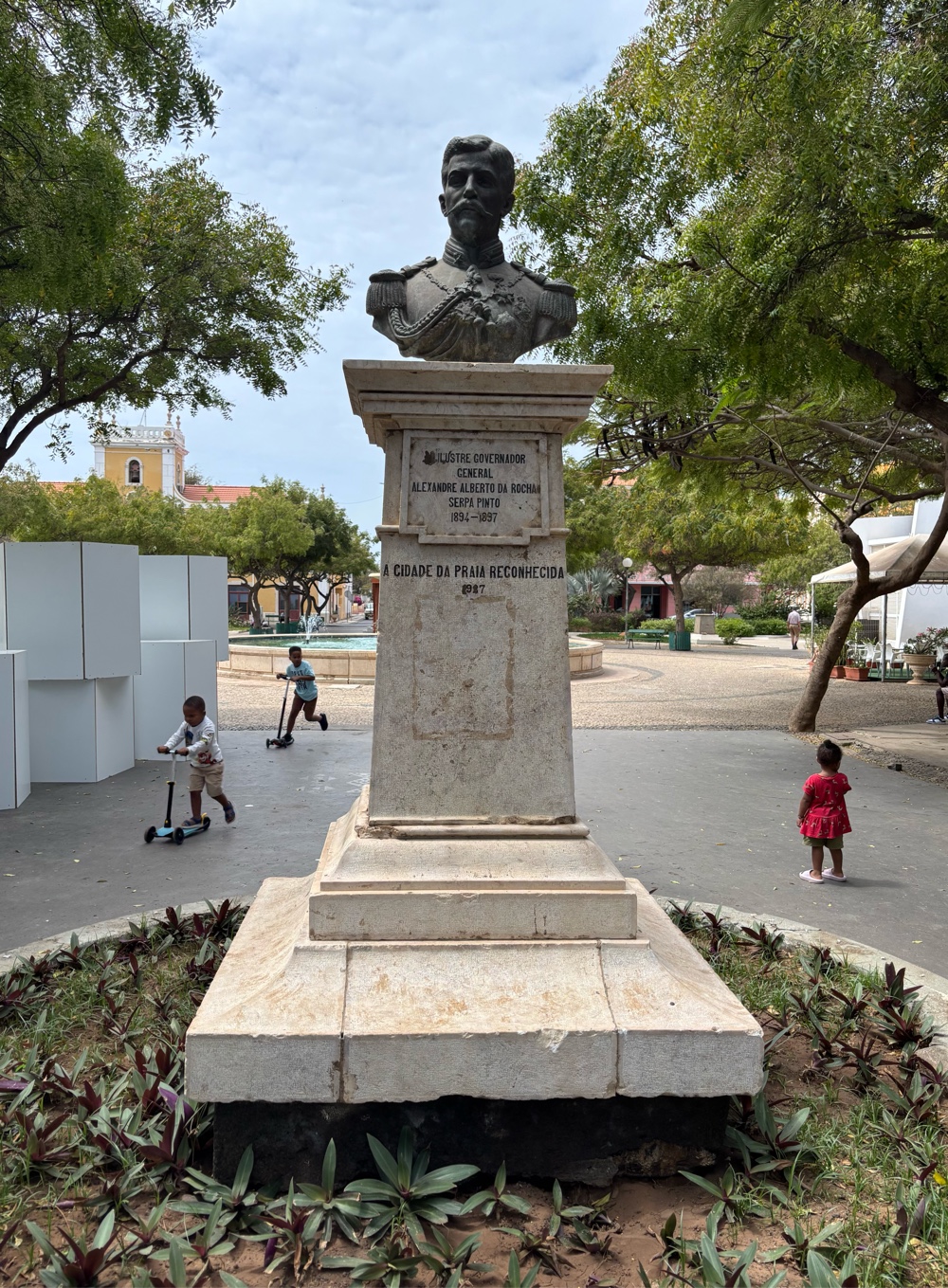 | | Two colonial (Portuguese) busts can be found in the park, paying homage to an 18th a 19th century figures who played a key role in Cabo Verde. Surprisingly, these busts have not been dismantled, as such colonial souvenirs have been in Canada. |
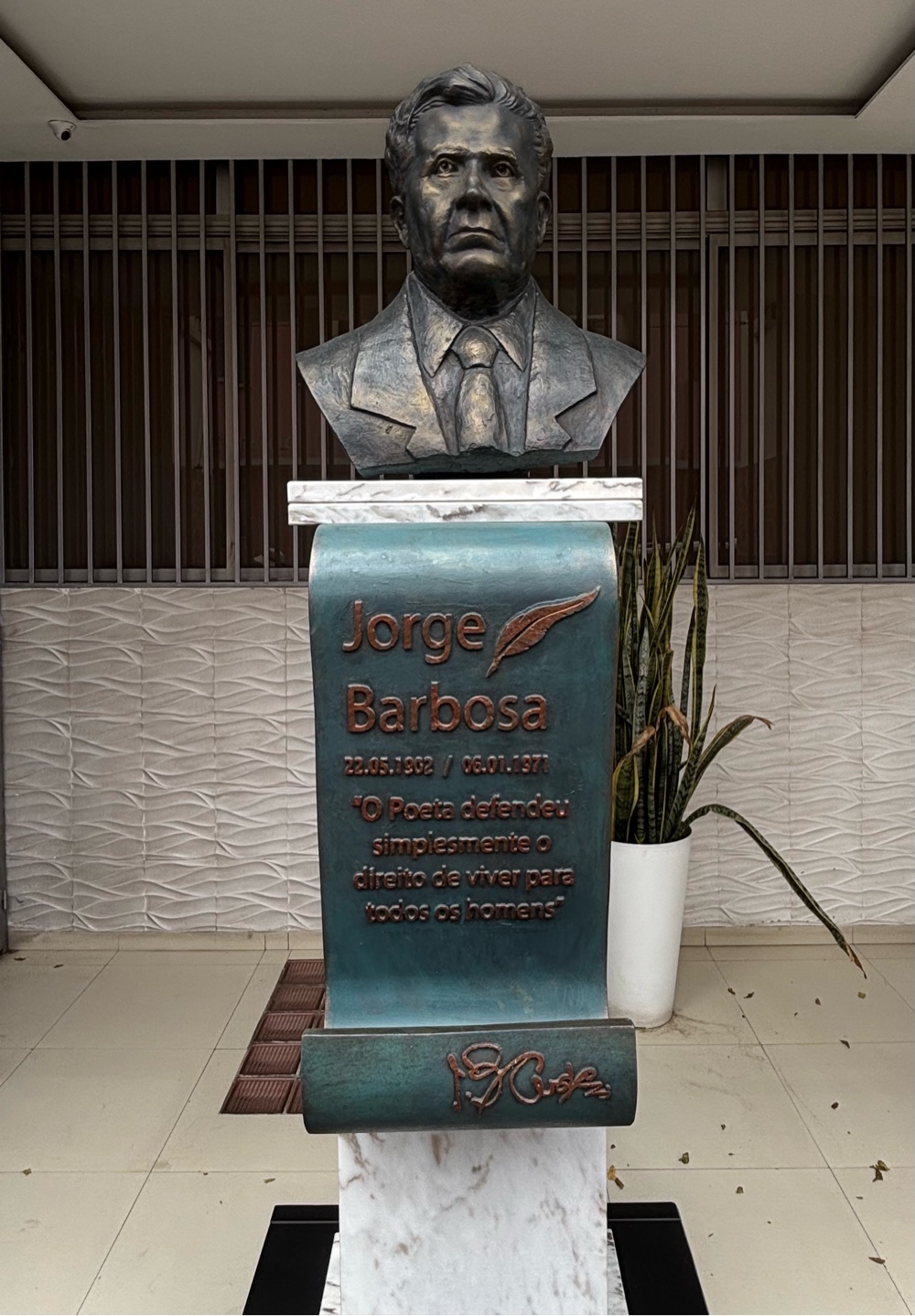 | | Cabo Verde is proud of its poets, as evidenced by the bust of this poet in Plato. |
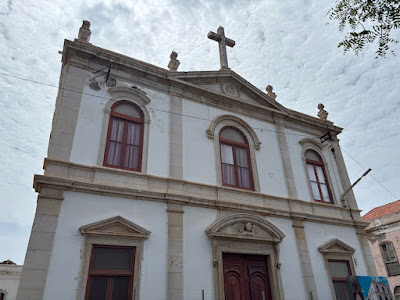 | | The Church of Our Lady of Grace sits adjacent to the park in Plato. It’s in rough shape, though! |
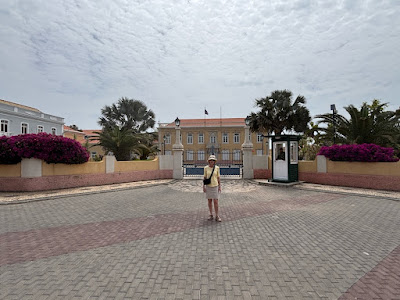 | | The Presidential Palace in Plato. Its tropical gardens are the most prim and proper in Praia. The President, Jose Maria Neves, lives there, having assumed office in 2021. Prior to that, he had been the Prime Minister for 15 years. |
 | | The huge Cabo Verde flag that we saw coming from the airport two days ago sits just outside the Presidential Palace. |
 | | The Geneon, Diago Gomes, is attributed with having been the first European explorer to have spotted Cabo Verde in the 1400s. |
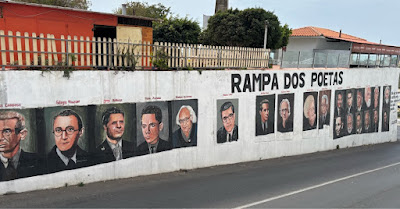 | | The roadway up to Plato has this series of street art portraits of the country’s best-known poets. More evidence of how revered poets are here. |
 | | Former military barracks adjacent to the Presidential Palace. |
 | | A Russian tank also sits adjacent to the Presidential Palace. |
 | | From Plato, one has a bird’s eye view of Praia (‘beach’) de Gamboa. It may look okay, but its waters are far from clean, due to a wastewater outflow adjacent to it. |
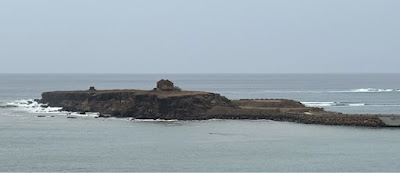 | | Santa Maria Island, next to Praia’s port, has a sad past, as it is where lepers and others with contagious diseases from the city were sent to live until the 1870s. The island is about to be transformed, however, as plans are underway to build a flashy casino there. |
 | The National Stadium in Praia. Cabo Verde’s football team has gained a spot in the FIFA World Cup this summer! The country is very proud, and rightfully so.
|
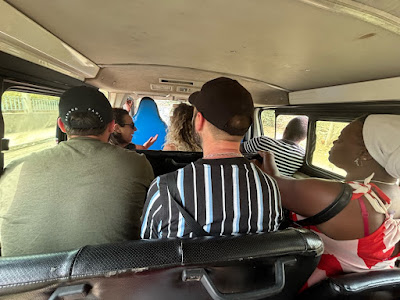 | | As we were finishing our walking tour of Praia and contemplating how to get to Cidade Velha, thirty minutes outside Praia, an aluguer (minivan) driver stopped and asked if we wanted to go there! It was crazily coincidental! We said, “Sure!” and jumped in. A taxi driver had earlier offered to take us for 50 Euros ($80 CAD), but this option got us there for $2.25 CAD each. An interesting experience, as we got to see how the average Joe gets around. These tiny vans seat up to 16 people (squeezed in) and 16 is exactly what the driver squeezed in. |
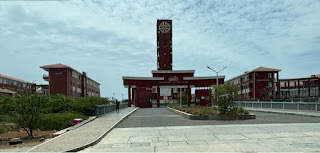 | We passed the University of Cabo Verde enroute to Cidade Velha. It is an impressive campus for such a small country.
Cidade Velha
Cidade Velha is half an hour west of Praia. It is here that European settlement began in Cabo Verde 500 years ago, as Portugal established a settlement there. It also served as the first African slave transit point. After awhile, however, the threat of pirate raids forced the Portuguese to move the settlement to current day Praia. Cidade Velha is now a UNESCO World Heritage Site. |
 | | Looking down on Cidade Velha as we approached it. |
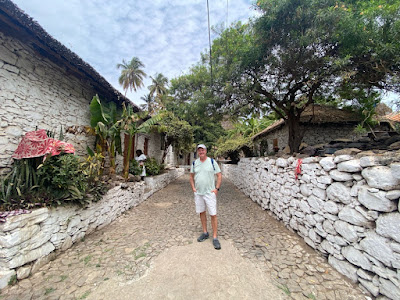 | | Walking the old streets of Cidade Velha, originally called Ribeira Grande. |
 | | In or near this banana-thatched roof, the first liberated slave is said to have made her home. |
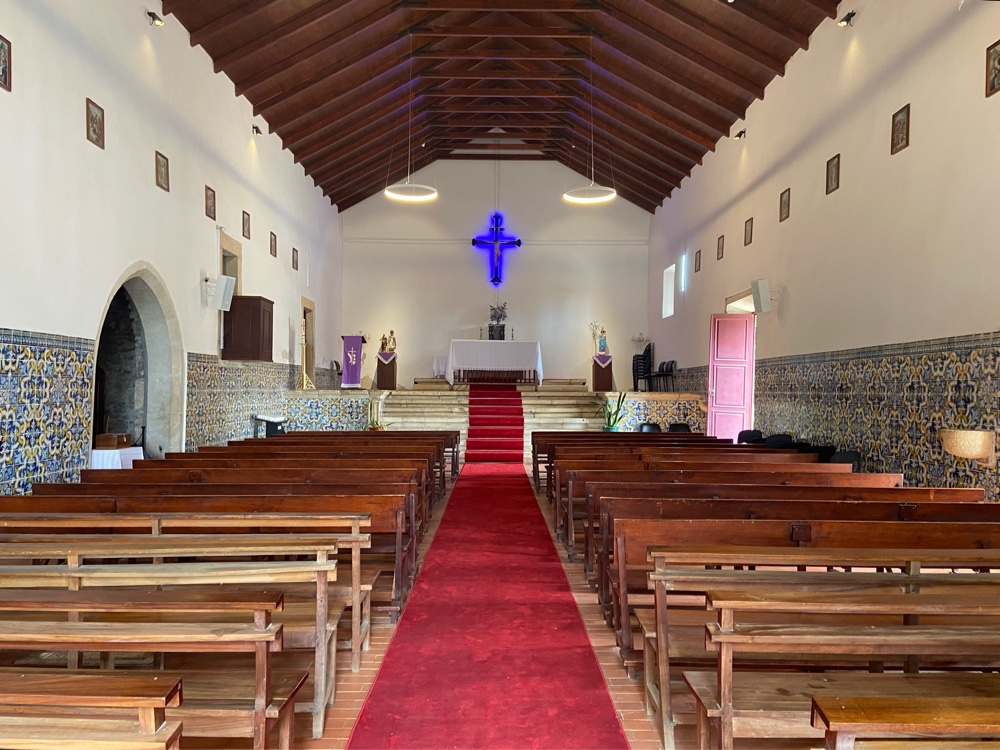
 | | The Church of Nossa Sehora de Rosario dates back to 1495, making it the oldest structure in Cabo Verde. |
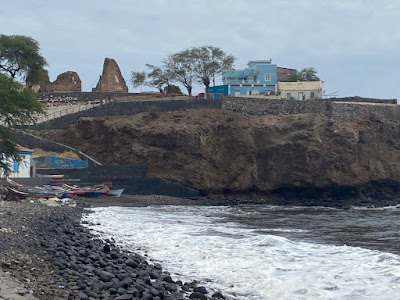 | | Cidade Velha’s picturesque beach and fishing boats. |
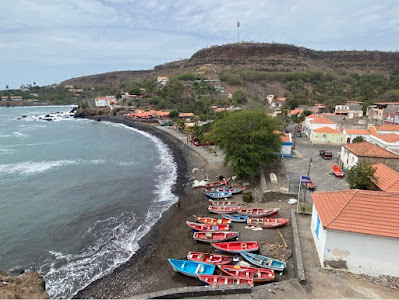 | View of Cidade Velha.
|
 | | High above Cidade Velha sits the 1593 Fort of St. Philip (‘Forteleza de Sao Filipe”). |
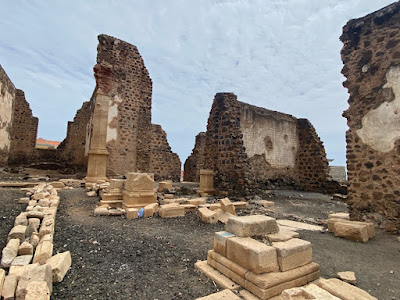
 | The ruins of the Church of the Conception, which was uncovered by Cambridge archaeologists In 2015, along with the graves of 1000 children, whose deaths remain a mystery. |
 | | The Canyon of Cidade Velha is well irrigated and remains green all year long, unlike most of the country. The terracotta-roofed building to the left is a Franciscan Convent. |
Forteleza de Sao Filipe (Fort of St. Philip) in Cidade Velha
 | | The view of Cidade Velha from the Fort of St. Philip. |
 |
A Few Loose Ends for the Day
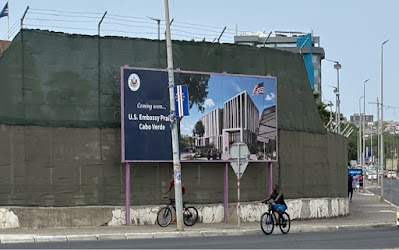 | | Arriving back in Praia via another packed ‘aluguer’, we saw the future site of the American embassy. |
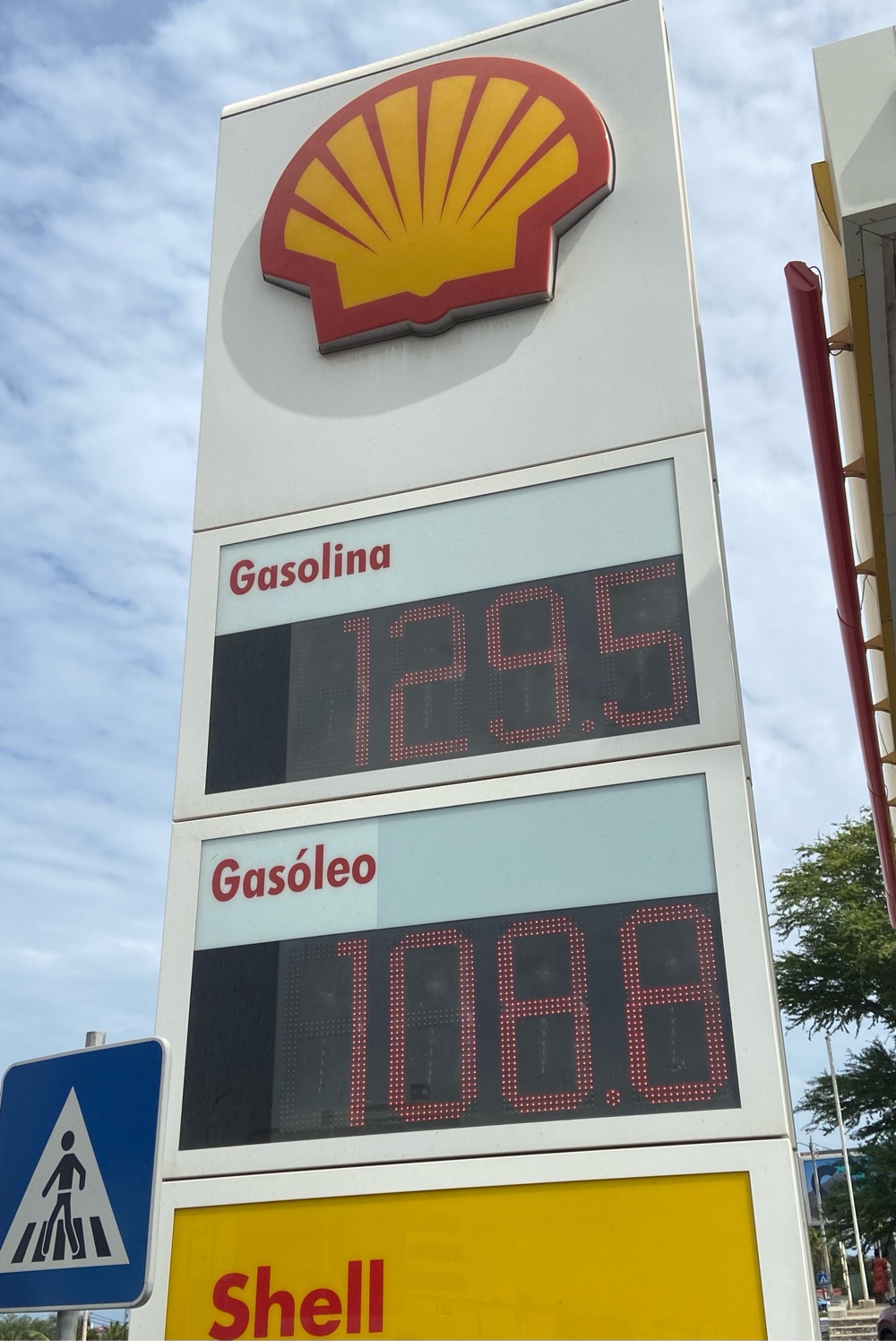 | | Gas costs $1.84 CAD per litre here. |
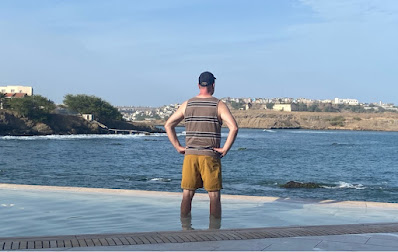
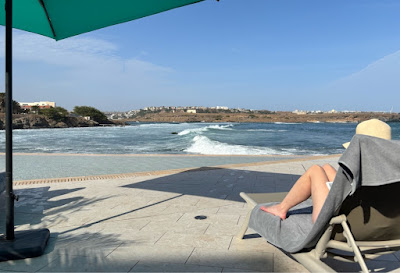 | | We ended the day by the Barcelo’s infinity pool, enjoying the sound and sight of the pounding waves. |
|
|




Comments
Post a Comment